
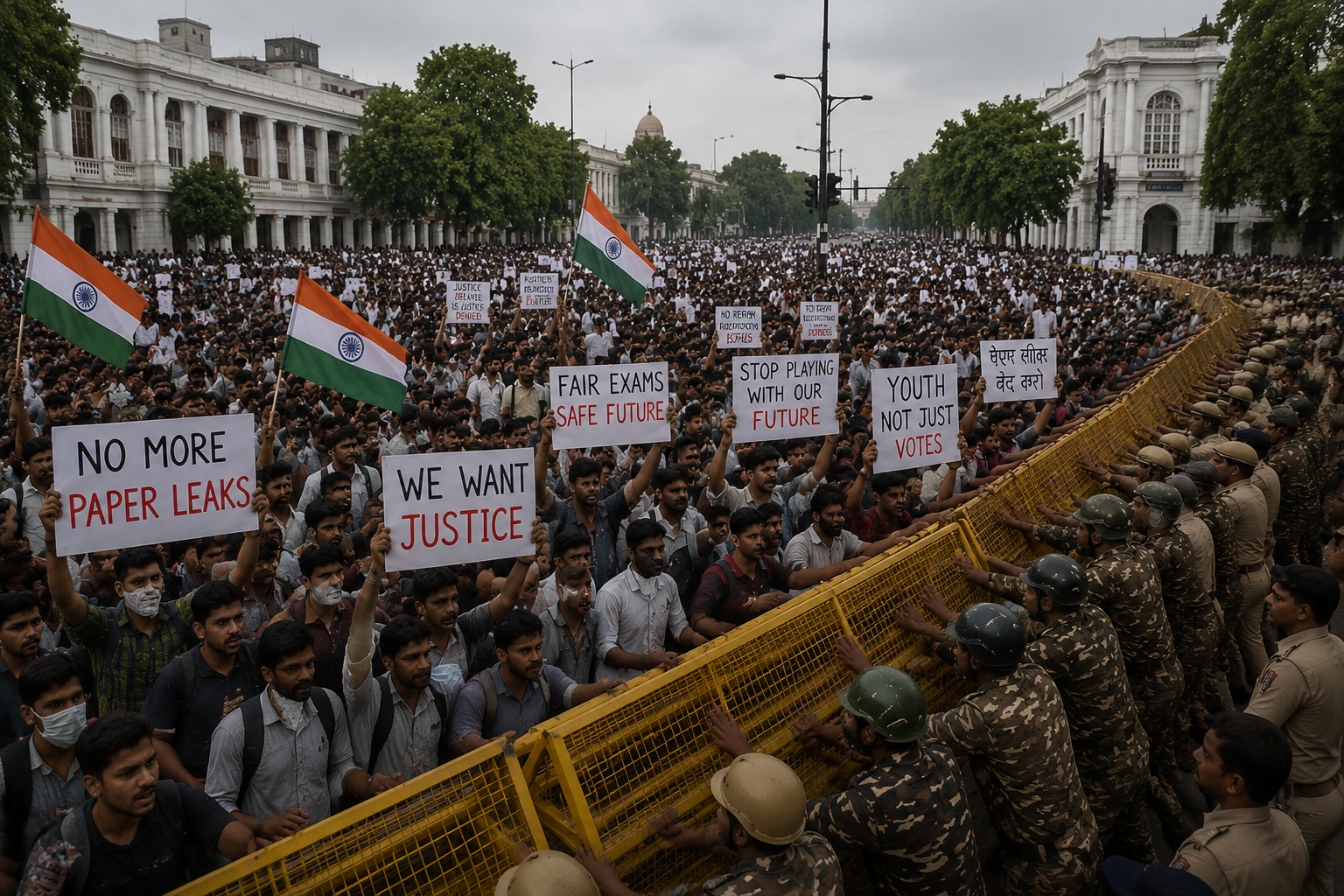

As of today, July 22, 2026, the Indian government finds itself at a critical crossroads between legislative reform and a surging youth-led movement. While the Centre is pushing ahead with a suite of education reforms aimed at restoring the integrity of competitive examinations, the streets of major cities and regional capitals remain occupied by protesters demanding immediate accountability for recent paper leaks.
A Nationwide Surge in Opposition
The scale of the unrest has expanded significantly over the last 24 hours. Tripura has now joined the Congress party’s nationwide push against exam paper leaks, signaling that the agitation has moved beyond the national capital into the northeastern states. The situation escalated as Delhi Police detained several opposition figures during protests centered on the NEET-UG paper leak allegations.
The political pressure is mounting within the halls of power as well. The Congress MP Saptagiri Ulaka has formally demanded the resignation of the Education Minister. Ulaka stated that the party "will continue to fight" for a comprehensive discussion on national issues, particularly the systemic failures that allowed the leaks to occur.
The Government’s Push for a 'Foolproof' System
In response to the mounting public anger, Prime Minister Narendra Modi has attempted to frame the issue of examination security as a matter of existential importance for the state. The Prime Minister has characterized the safeguarding of the examination process as a "National Duty." This rhetorical shift suggests that the government intends to treat future irregularities with the same severity as threats to national security.
PM Modi has called for the immediate development of a "foolproof exam system" to prevent further disruptions to the lives of millions of students. While the specific technical details of these reforms have not been reported yet, the government has signaled a willingness to engage in dialogue. a march organized by the CJP closed in on Parliament yesterday—necessitating the use of teargas shells by security forces—the government officially opened talks to address the grievances of the protesters.
Youth-Led Agitation and Cultural Impact
The current movement is notably characterized by its demographic makeup. The situation as a "youth-led movement," with thousands of students participating in protests that have now sustained momentum for several days. The agitation has also garnered significant cultural support, moving beyond the student body into the mainstream.
For now, the government’s promise of a more secure, reformed system remains in direct competition with the public's demand for immediate ministerial accountability.