
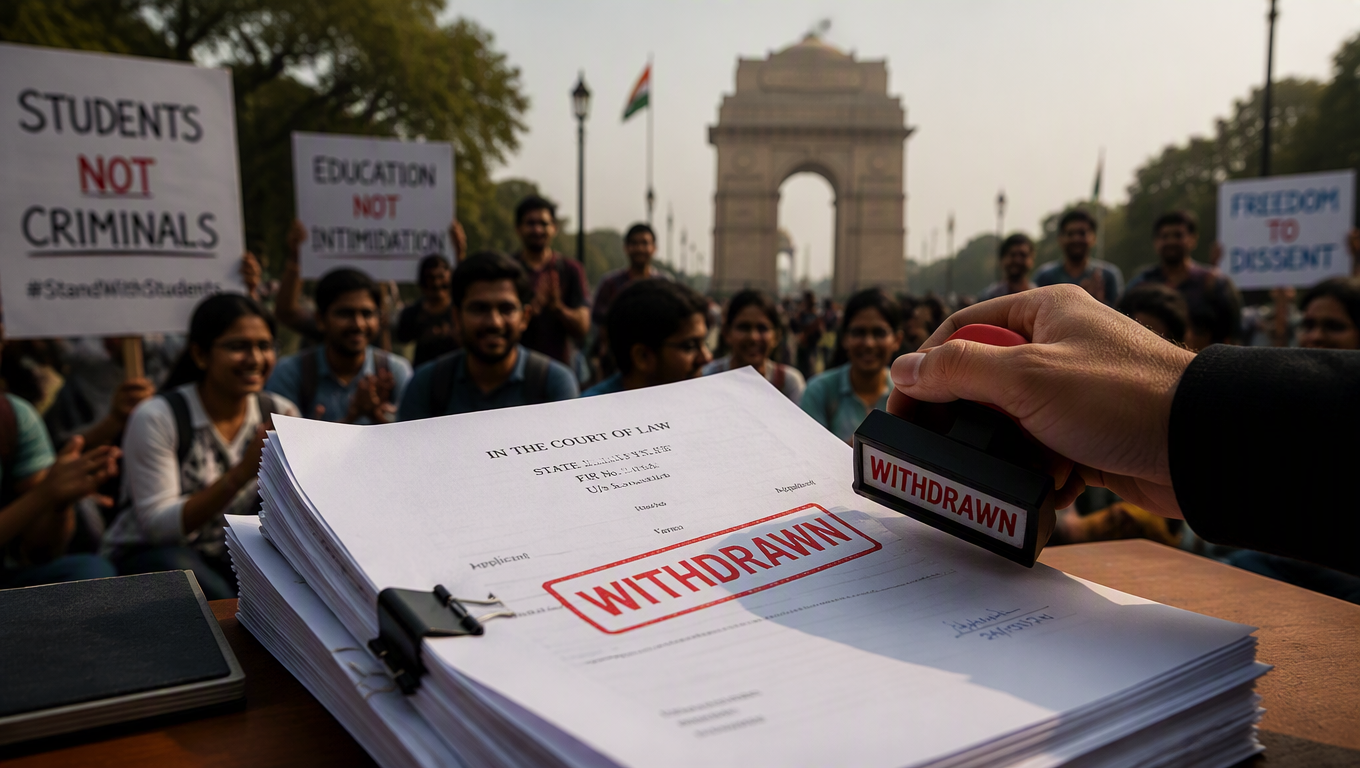

As of today, August 1, 2026, hundreds of students involved in recent demonstrations have received a significant legal reprieve. The Delhi government has officially ordered the withdrawal of multiple First Information Reports (FIRs) filed against individuals who participated in the NEET-UG and CJP movements, provided they do not have a prior criminal history.
The decision, which was formalized in late July, marks a pivot in how the administration handles student-led demonstrations. By removing the threat of ongoing litigation, the government appears to be prioritizing the academic and professional futures of the youth involved in these high-profile protests.
Selective Clemency for Student Demonstrators
According to reports, the Delhi government has specifically ordered the withdrawal of 13 FIRs. These cases were registered during the height of the NEET-UG protests, where students took to the streets to voice grievances regarding the national medical entrance examination process.
The move is seen as a conciliatory gesture toward the student community. Legal experts note that the presence of an FIR can significantly hinder a student's ability to secure government employment or obtain visas for higher education abroad. By halting these specific legal actions, the government is effectively clearing the records of those whose only alleged offense was participating in public dissent.
The Distinction of Criminal Antecedents
A critical component of this order is its conditional nature. The withdrawal of cases is strictly limited to protesters "without criminal antecedents." This means that individuals who were already on the police radar for other offenses or who have a documented history of criminal activity will not benefit from this directive.
For those with existing criminal records, legal proceedings will continue as scheduled. The relief is not universal, ensuring that the legal system maintains a distinction between first-time student protesters and those the state classifies as habitual offenders. This "clean slate" policy is designed to protect the interests of genuine students while maintaining a firm stance on law and order.
Context of the NEET-UG and CJP Demonstrations
The FIRs in question stem from a series of organized actions, including those referred to as the CJP. These demonstrations saw thousands of medical aspirants and activists gather in the capital to demand transparency and reforms. While the protests were largely characterized by student participation, they also led to several clashes and the subsequent filing of police cases for various public order offenses.
The decision to take back these FIRs follows a period of intense deliberation regarding the long-term impact of legal cases on the lives of young citizens. By filtering the beneficiaries through the lens of criminal history, the Delhi government aims to balance the right to peaceful protest with the necessity of penalizing actual criminal behavior.