
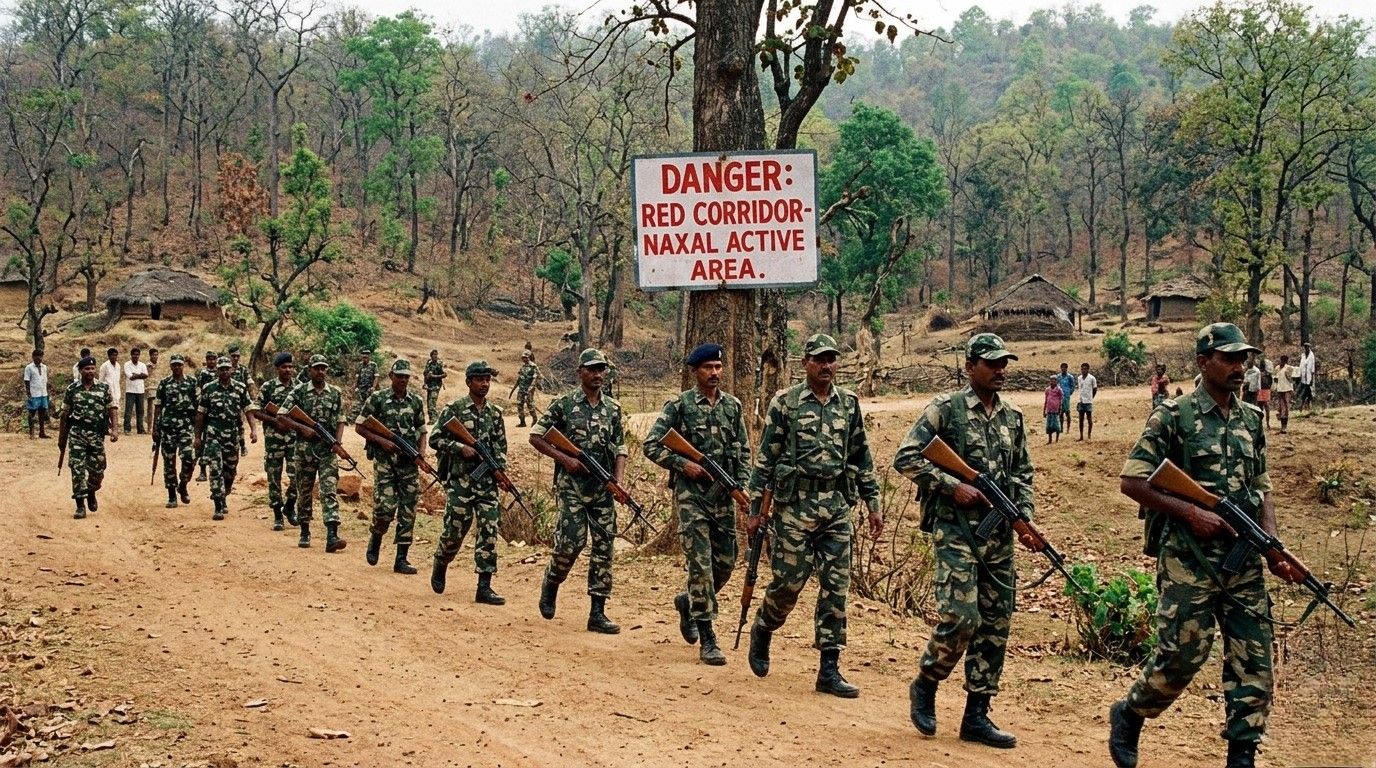

New Delhi: On March 30, one of the government’s most significant self-imposed deadlines met its moment of truth. Home Minister Amit Shah took to the floor of the Lok Sabha to announce that Left Wing Extremism (LWE) no longer grips the Indian heartland, asserting that the Centre has officially turned the page on the ‘Red Terror’ era.
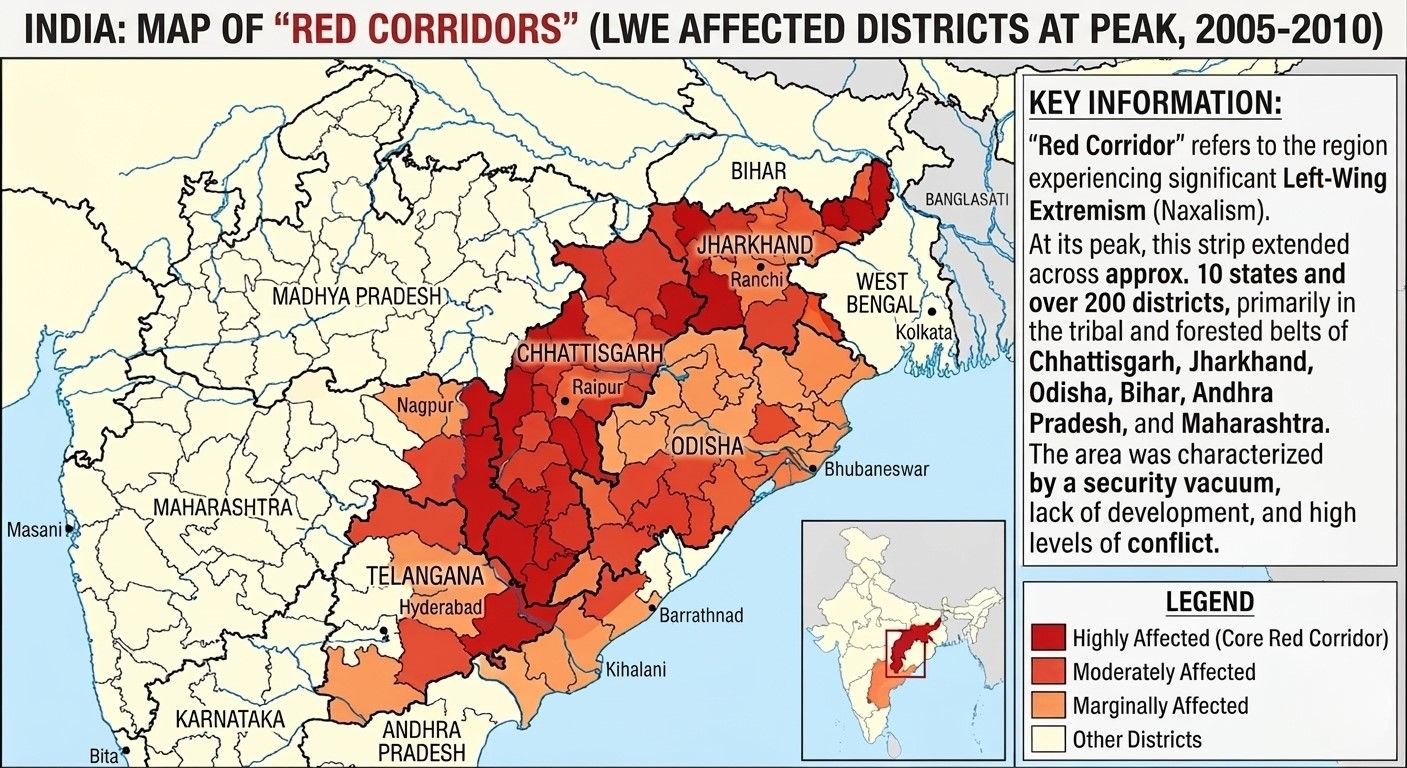
“India is effectively Naxal-free,” Shah announced, referring to a coordinated national effort that has unfolded over more than a decade. The announcement followed a steady decline in LWE violence, the dismantling of insurgent leadership, and the contraction of the ‘Red Corridor’ across central and eastern India.
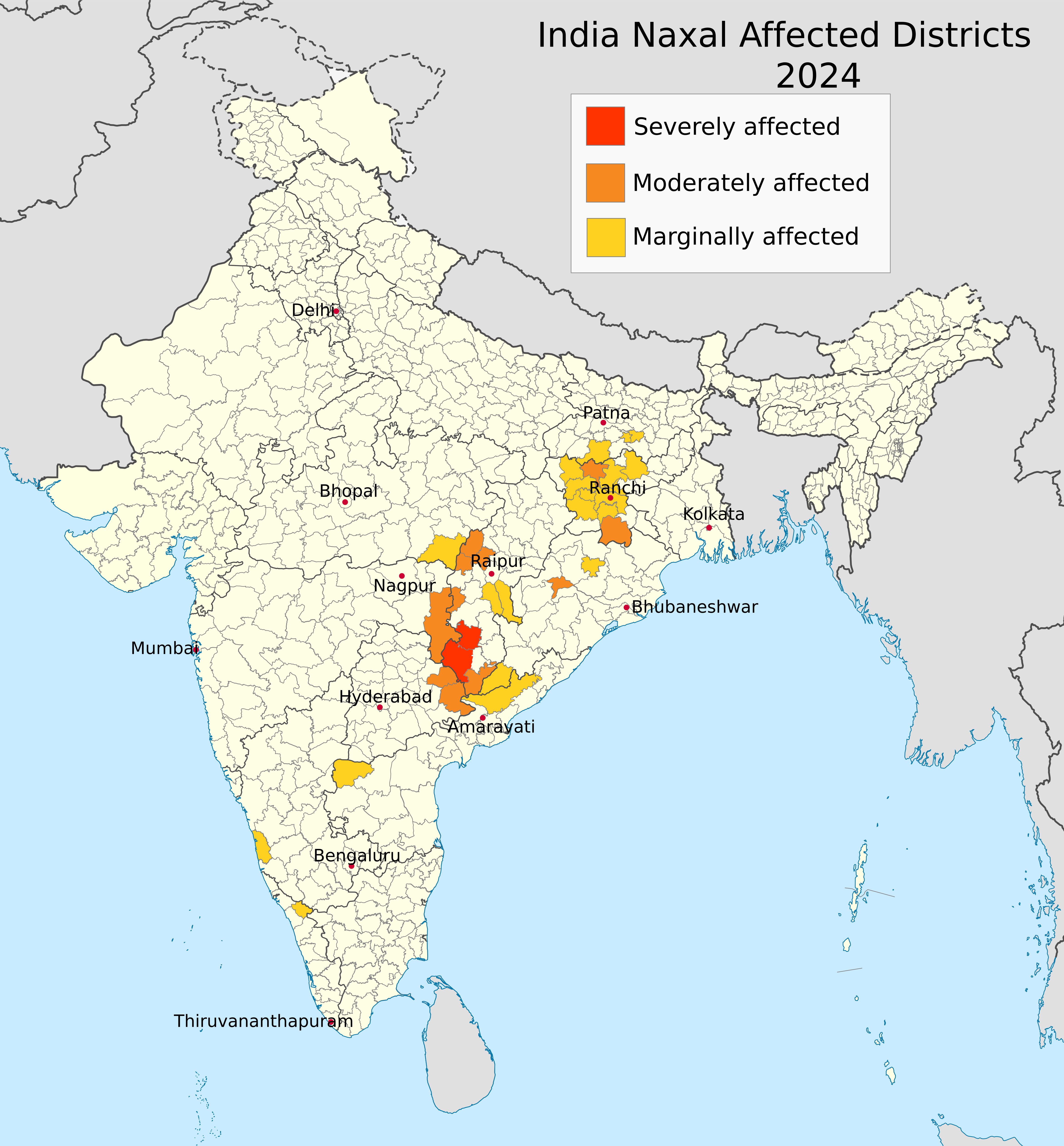
Official data presented to the House indicated that the number of most-affected districts had dropped from 36 in 2014 to zero by March 31, 2026. Violent incidents linked to Naxal groups have fallen by nearly 88% from their peak in 2010. Security agencies attribute this outcome to sustained joint operations, infrastructure expansion, improved intelligence coordination, and targeted financial crackdowns.
The Centre also emphasized the role of state governments in maintaining operational continuity and executing development programmes in previously inaccessible regions.
The statement marked the culmination of a sustained, multi-layered campaign that combined security operations, infrastructure expansion, financial disruption, and rehabilitation measures.
The Origins
The roots of the Naxal movement trace back to May 25, 1967, in Naxalbari, a small village in northern West Bengal. What began as a localized agrarian conflict between landless peasants and landlords escalated into an armed uprising. The incident, triggered by tensions involving a tribal cultivator, evolved into a broader ideological movement under leaders such as Charu Majumdar, Kanu Sanyal and Jangal Santhal. Drawing on Maoist doctrine, the early leadership framed the struggle as a “protracted people’s war”, positioning rural insurgency as the path to overthrowing the state.
By the early 1970s, the movement had spread beyond its agrarian base. Urban student groups, particularly in Kolkata, became active participants. Radicalization among sections of educated youth gave the movement visibility beyond its geographic origins. However, strong state crackdowns during this period fragmented the leadership and weakened its initial momentum.
The movement re-emerged in a more organized and militarized form in the 1980s and 1990s. Two major groups — the People’s War Group (PWG) in Andhra Pradesh and the Maoist Communist Centre (MCC) in Bihar — expanded operations into forested and tribal regions. These areas, characterized by limited state presence and persistent underdevelopment, became their operational strongholds. In 2004, the merger of these factions led to the formation of the Communist Party of India (Maoist), consolidating leadership and strategy.
At its peak, the insurgency exercised significant influence across parts of Chhattisgarh, Jharkhand, Odisha, Maharashtra and Andhra Pradesh. The Maoists established parallel administrative systems, often referred to as ‘Janatana Sarkars’, in remote areas. These structures collected levies, resolved disputes, and enforced authority through armed cadres. Mining operations, infrastructure projects, and local governance structures were frequent targets of extortion and disruption.
The period between 2005 and 2015 saw some of the most intense violence. High-profile attacks underscored the scale and capability of the insurgency. In April 2010, 76 security personnel were killed in an ambush in Chhattisgarh’s Dantewada district. In 2013, a political convoy was attacked in Jhiram Ghati, resulting in the deaths of several senior political leaders. These incidents highlighted the insurgency’s ability to execute coordinated, high-casualty operations.
Philosophical Veneer
There is a dimension of Naxalism that statistics and security briefings rarely capture — its enduring romanticism and philosophical allure. For decades, the movement drew not only from deprivation but from a powerful moral narrative: the idea of rebellion as justice, of revolution as dignity for the dispossessed. To many of its early adherents, especially among students and intellectuals, Naxalism was less an insurgency and more an ethical calling — a radical critique of inequality, land ownership, and state power.
The imagery of armed struggle in forests, the invocation of Maoist doctrine, and the language of sacrifice created a mythos that blurred the line between political violence and moral resistance. Even as the movement hardened into militarized structures and coercive control in rural belts, this philosophical veneer continued to attract sympathies in certain circles.
The challenge for the Indian state, therefore, has not only been to dismantle the gun but also to engage with the grievance and idealism that once gave it legitimacy. In declaring the end of ‘Red Terror’, the state closes a chapter of violence — but the quieter task remains: addressing the questions of justice, inequality, and representation that first gave that rebellion its voice.
‘SAMADHAN’ Worked
The government’s response evolved over time. Early approaches were often criticized as fragmented, with coordination challenges between central and state forces. A shift began to take shape in the mid-2010s with the introduction of a more integrated strategy. The SAMADHAN doctrine — an acronym encompassing intelligence, technology, action, and development — became the framework guiding operations.
A key component of this strategy was the simultaneous deployment of security forces and development initiatives. The expansion of road networks into previously inaccessible areas altered the operational landscape. Between 2014 and 2026, more than 12,000 kilometers of roads were constructed in LWE-affected regions. These roads enabled faster troop movement, improved supply chains, and increased administrative reach.
Telecommunications infrastructure followed a similar trajectory. Over 9,000 mobile towers were installed, significantly improving connectivity in remote districts. Banking penetration also expanded, with more than 1,800 new branches opened. These measures reduced the isolation of tribal communities and facilitated direct benefit transfers, weakening the insurgency’s influence over local populations.
Security operations became more targeted and intelligence-driven. Large-scale offensives were complemented by smaller, precise actions based on real-time information. One of the most significant operations was launched in early 2024 in the Abujhmarh region of Chhattisgarh. Known as Operation Kagaar or Operation Black Forest, it involved the deployment of over 10,000 personnel into one of the most inaccessible forest zones in the country.
The operation marked a turning point. In May 2025, security forces carried out a sustained offensive in the Karreguttalu Hills, neutralizing several senior Maoist leaders, including Nambala Keshava Rao, also known as Basavraj, who served as the General Secretary and chief military strategist of the CPI (Maoist). His death disrupted the command structure of the organization. Subsequent operations led to the elimination of other key figures, including L Prabhakar Rao in early 2026.
The decapitation of leadership had a cascading effect. Communication networks weakened, recruitment slowed, and coordination between regional units deteriorated. Security agencies reported fragmentation within the ranks, with some cadres retreating deeper into forests while others sought to surrender.
Mainstreaming
The surrender-cum-rehabilitation policy played a critical role in accelerating this trend. Revised financial incentives, including payments of up to ₹5 lakh for higher-ranking cadres, encouraged defections. Rehabilitation packages included vocational training, housing support, and financial assistance for reintegration into civilian life. In 2025 alone, more than 2,300 cadres surrendered, marking the highest annual figure on record.
Financial disruption was another key pillar of the strategy. The National Investigation Agency (NIA) established dedicated units to track and dismantle funding networks. Assets linked to Maoist operations were seized, and channels of extortion were systematically targeted. State governments also intensified efforts to monitor and disrupt financial flows, reducing the insurgency’s operational capacity.
States such as Telangana demonstrated the impact of coordinated policy implementation. A combination of sustained policing, intelligence operations, and rehabilitation measures led to a significant decline in Maoist activity. Hundreds of cadres surrendered over a short period, signalling a broader shift in the movement’s trajectory.
Despite these gains, officials acknowledge that the ideological underpinnings of Naxalism have not fully disappeared. The Home Ministry has introduced a new classification for 2026: ‘Legacy and Thrust Districts’. These districts are no longer considered actively affected but remain under close monitoring. Development efforts in these areas are being intensified to prevent any resurgence.
Attention has also shifted to urban networks. Investigative agencies have focused on individuals and groups accused of providing ideological, logistical, or financial support from cities. This aspect of the strategy reflects a broader understanding that insurgencies are sustained not only by armed cadres but also by support structures that operate beyond conflict zones.
Government officials emphasize that long-term stability depends on sustained development. The concept of “saturation development” has emerged as the next phase. The objective is to ensure full coverage of welfare schemes in previously affected regions. Programs related to healthcare, housing, cooking fuel, and financial inclusion are being expanded with the aim of addressing underlying socio-economic vulnerabilities.
The Bastar and Dandakaranya regions, once central to Maoist operations, are now focal points for these initiatives. The expansion of schools, healthcare facilities, and employment opportunities is intended to consolidate the gains achieved through security operations. Officials argue that the absence of governance created the conditions for insurgency, and that consistent state presence is essential to prevent its return.
The declaration of a Naxal-free India is both a milestone and a transition point. It reflects the dismantling of an organized armed movement that operated for decades across multiple states. At the same time, it underscores the need for continued vigilance. Security infrastructure remains in place, with hundreds of fortified police stations established across former conflict zones.
The trajectory of Naxalism in India — from a localized uprising in 1967 to a nationwide insurgency and its eventual decline — reflects the complexity of internal conflicts. It underscores how ideology, governance gaps, and state response interact over time. The outcome now shifts the focus from conflict management to long-term integration and stability. In that transition lies the quiet promise of a republic reclaiming both its margins and its moral centre.