
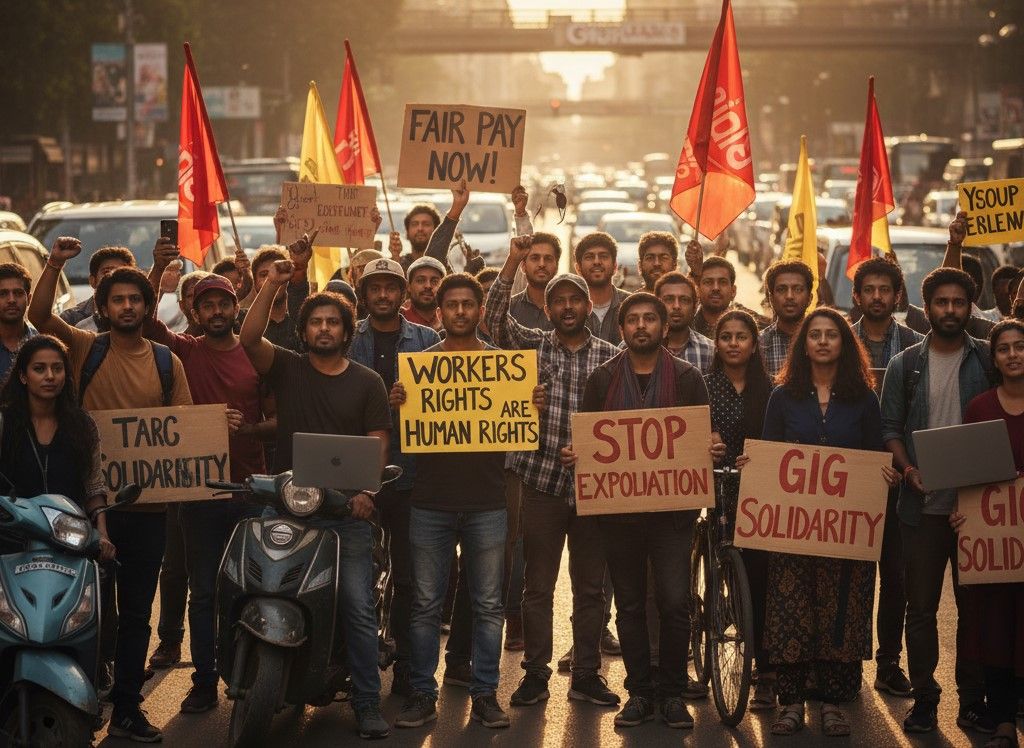

New Delhi: The nationwide shutdown by drivers working with Ola, Uber and Rapido on Saturday marks more than just another flashpoint in India’s fast-growing gig economy. It signals a decisive shift in how platform workers are organising themselves — from scattered, city-level protests to coordinated, pan-India mobilisation that is increasingly difficult for governments and companies to ignore.
Dubbed the ‘All India Breakdown’, the strike saw drivers simultaneously switch off their apps across multiple states, severely disrupting urban transport networks. Unions claimed that 70-80% of app-based taxis and auto-rickshaws stayed off the roads in Maharashtra alone, while similar disruptions were reported in Telangana, Delhi and other major hubs. The scale and synchronisation of the protest underline a new phase of gig worker activism: one that is organised, networked and consciously political.
For years, gig workers were seen as structurally difficult to unionise. Platform companies relied on algorithmic management, individual contracts and flexible work arrangements that fragmented workers and diluted collective bargaining. That model is now showing cracks.
What has changed is the workers’ growing awareness of their collective leverage. Ride-hailing drivers, delivery workers and quick-commerce riders increasingly recognise that platform businesses depend on scale and uninterrupted service. When workers act in unison — even briefly — the disruption is immediate and visible.
Saturday’s strike did not emerge in isolation. In December 2025, food delivery and quick-commerce workers staged demonstrations across cities, including during peak business periods, protesting low payouts, opaque incentive structures and rising work-related costs. Earlier transport strikes in states such as Karnataka, Maharashtra and Telangana laid the groundwork for cross-platform coordination. Over time, these movements have evolved from reactive protests into sustained campaigns with shared demands and national-level leadership.
Rise of structured unions & federations
A key development has been the emergence of formal unions and federations such as the Telangana Gig and Platform Workers Union (TGPWU), the Indian Federation of App-Based Transport Workers (IFAT) and the Rashtriya Driver Sanyukta Morcha Samiti. These organisations are building state-wise networks, coordinating protests across regions and engaging directly with policymakers.
The presence of drivers from multiple states at Delhi’s Jantar Mantar — and meetings with senior political leaders — reflects a shift from street-level agitation to institutional engagement. Union leaders are no longer only reacting to fare cuts or policy changes; they are demanding a seat at the table in drafting regulations that govern the sector.
This organisational maturity was evident in the clarity of demands during the latest strike: government-notified minimum fares, withdrawal of provisions allowing deep fare discounting under the Motor Vehicle Aggregator Guidelines 2025, a ban on unregulated bike taxis, and action against the use of private vehicles for commercial rides. The articulation of these demands suggests a move towards long-term income security rather than short-term concessions.
Forcing state to look again
The growing assertiveness of gig workers is already reshaping the policy conversation. The Economic Survey 2025-26 explicitly flagged gaps in worker protection even as it acknowledged the rapid expansion of the gig economy. This official recognition reflects mounting pressure on the state to reconcile platform-driven growth with labour safeguards.
State governments, too, are being forced to respond. Maharashtra Transport Minister Pratap Sarnaik’s warning to aggregator companies against “injustice” towards drivers — while urging that commuters should not suffer — illustrates the delicate balancing act authorities now face. The earlier tendency to frame gig disputes as private matters between platforms and “partners” is giving way to a recognition that these are labour issues with social and political consequences.
Importantly, gig workers are also challenging the narrative of flexibility as empowerment. Rising costs linked to compliance — such as mandatory panic buttons — fluctuating commissions, and policy changes like open permit regimes have eroded earnings. By foregrounding these structural issues, unions are reframing the debate around sustainability rather than convenience.
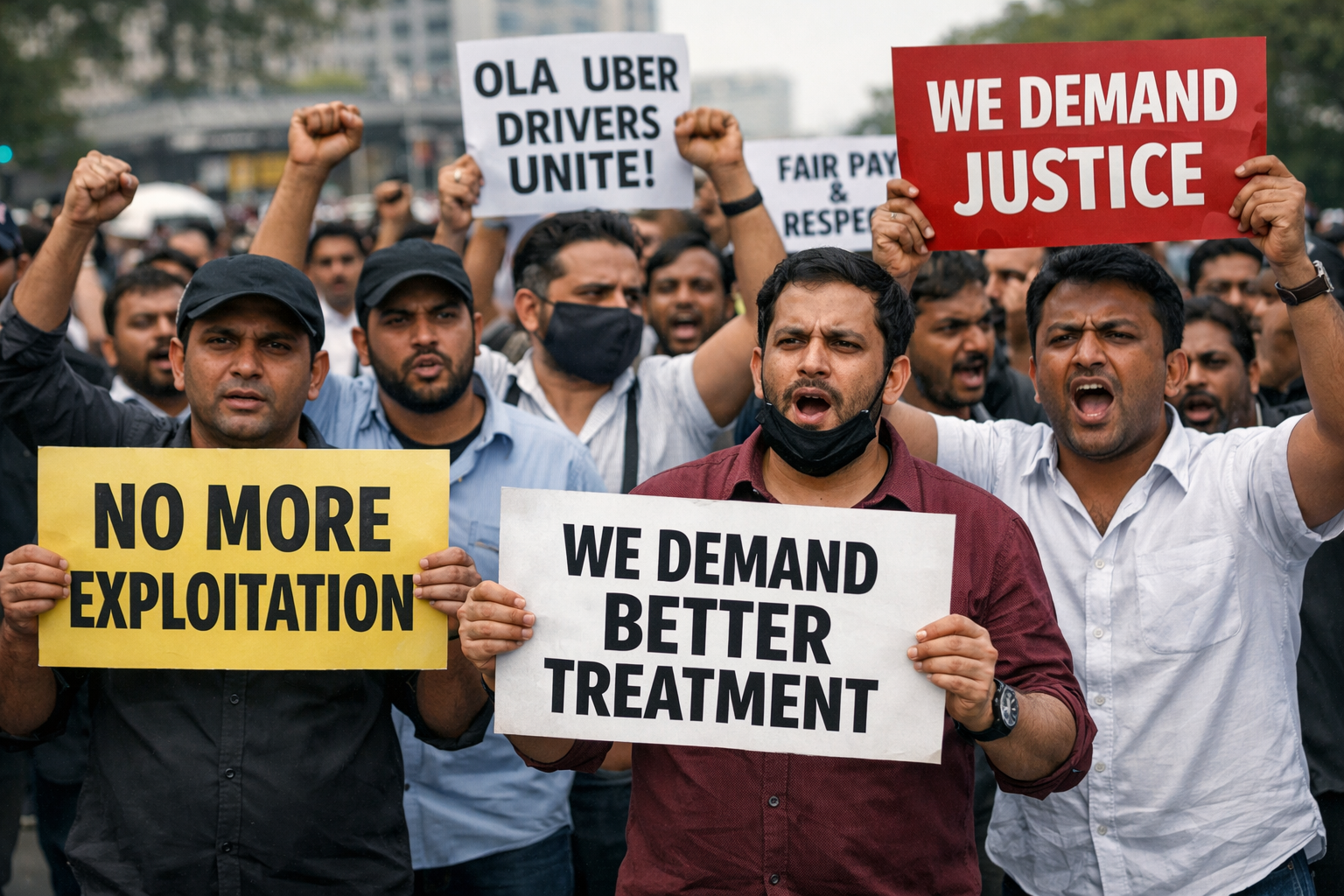
What distinguishes the current wave of strikes is not just scale, but strategy. The threat of a larger nationwide protest on March 22 and 23, involving thousands of organisations, signals a willingness to escalate in calibrated steps. The ability to mobilise across platforms — autos, cabs, bike taxis and delivery services — further amplifies bargaining power.
This coordination reflects a broader global trend, where gig workers are experimenting with new forms of collective action suited to platform-based work. In India, the sheer size of the workforce — running into millions — gives these movements particular weight.
Towards a structured future
The trajectory of gig worker mobilisation suggests that the sector is moving towards a more formalised labour framework, whether platforms welcome it or not. As unions consolidate and policy scrutiny intensifies, the era of regulatory ambiguity may be nearing its end.
For governments, the challenge will be to design regulations that protect workers without stifling innovation. For platforms, the choice is between engaging constructively with organised labour or facing repeated disruptions. And for gig workers, the current moment represents a rare convergence of numbers, organisation and political attention.
The nationwide strike is thus not just a protest against fares or policies. It is a declaration that gig workers — once treated as atomised service providers — are emerging as a collective force, capable of shaping the future of platform work in India.