
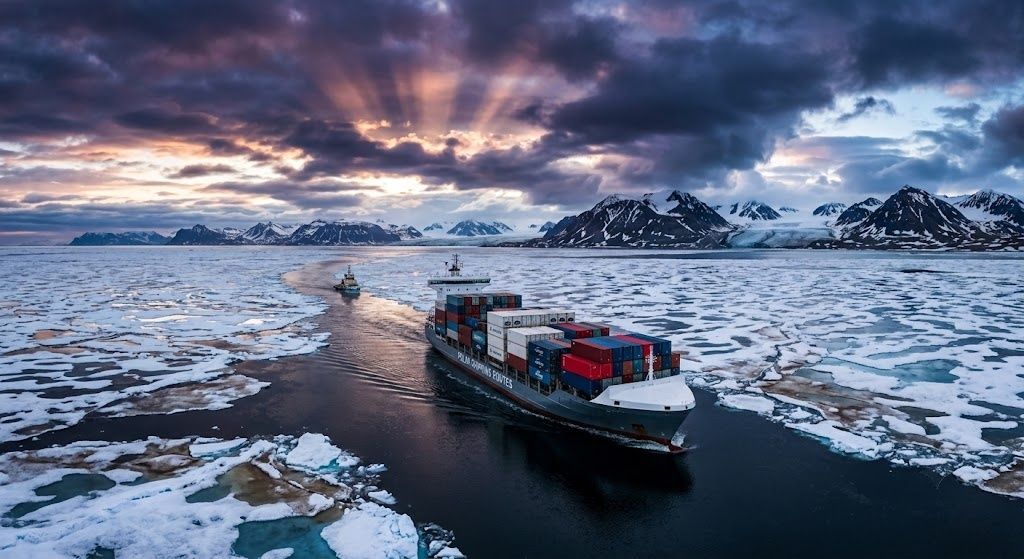

As global trade routes face increasing scrutiny over vulnerability and geopolitical friction, Beijing is turning its focus northward. Recent reports highlights how China is advancing its strategic transit goals by sailing the "Ice Silk Road" through the Arctic, effectively creating alternative pathways that bypass traditional maritime chokepoints.
The Strategic Shift to Northern Shipping Lanes
The pursuit of northern maritime routes represents a calculated effort to optimize international trade and secure supply chains. China is actively utilizing these northern waters to navigate around congested and vulnerable shipping chokepoints. By sailing the "Ice Silk Road" into the Arctic, commercial transit can avoid the traditional geographic bottlenecks that have historically dominated global maritime commerce.
Origins and Evolution of the Polar Vision
While current voyages bring renewed attention to the region, the concept has deep roots in Beijing's long-term planning. As documented by the China Media Project, the "Polar Silk Road", also referred to as the Ice Silk Road, was first proposed by Xi Jinping back in 2017. The initiative was subsequently formalized in China's official Arctic Policy white paper released in 2018. Over the years, academic literature has consistently noted that establishing these Arctic shipping routes serves the dual purpose of revolutionizing energy geopolitics and bypassing unstable or insecure corridors like the Strait of Malacca.
Implications for Global Trade and Geopolitics
The operationalization of northern routes marks a significant evolution in maritime strategy. Academic studies examining China's broader Belt and Road Initiative have long emphasized the geopolitical importance of controlling and bypassing chokepoints. By opening reliable paths through the Arctic, stakeholders are witnessing a structural shift in how goods and energy move between Asia and the rest of the world. As these voyages continue to unfold, they promise to redraw the map of international shipping and redefine modern supply chain security.