
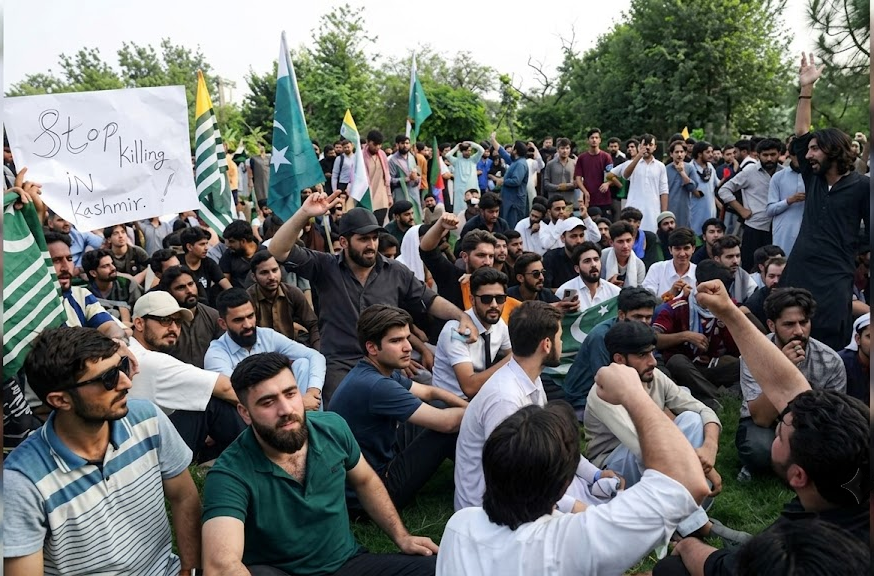

The streets of Pakistan-occupied Kashmir (PoK) are witnessing an unusual cultural and political phenomenon this week. As of July 31, 2026, reports indicate that the atmosphere in Muzaffarabad and surrounding districts is thick not just with the tension of civil unrest, but with the defiant verses of Indian revolutionary Ram Prasad Bismil. The iconic poem "Sarfaroshi Ki Tamannah" has become the anthem of a burgeoning resistance movement, signaling a deep-seated shift in the socio-political landscape of the region.
A Revolutionary Anthem Reborn
The use of Bismil’s poetry is particularly striking given its historical context. Background: Ram Prasad Bismil was a key figure in India’s struggle against British colonial rule, and his name is synonymous with the Kakori conspiracy. By chanting these specific verses, protesters in PoK are drawing a direct parallel between their current grievances and the anti-colonial struggles of the early 20th century.
According to reports, the reverberation of these verses across the valley highlights a rejection of the local administration's narrative. The choice of language and imagery—centered on sacrifice and the quest for justice—suggests that the protesters no longer see their struggle as a mere local administrative dispute, but as a fundamental fight for civil liberties.
Security Crackdown and Human Rights Concerns
The escalation of protests follows a series of stringent security measures. Recent days have seen a massive deployment of paramilitary forces across various sectors of PoK. Generally, such crackdowns in the region are triggered by rising inflation, high electricity bills, and demands for political autonomy. However, the current wave of unrest is reportedly being met with unprecedented force.
Allegations of human rights violations have surfaced as local activists report arbitrary detentions and the use of excessive force to disperse crowds. While official statements from the Pakistani government maintain that these measures are necessary for "public order," the visibility of the crackdown has drawn international scrutiny. The use of Bismil's verses serves as a vocal counter-narrative to the state-enforced silence.
The Geopolitical Undercurrent
The adoption of Indian cultural symbols of resistance within PoK presents a complex challenge for Islamabad. Historically, the region has been a flashpoint of nationalist sentiment, but the current alignment with Indian revolutionary history marks a departure from the traditional framing of the conflict.
Several factors have contributed to this boiling point:
- Economic Distress: Skyrocketing costs of essential goods and utilities have fueled the initial fire.
- Political Marginalization: Protesters claim the local government lacks genuine authority to address their needs.
- Cultural Defiance: The use of Bismil's poetry acts as a provocative tool against the state's ideological control.
As the situation remains volatile on July 31, 2026, the "Sarfaroshi" sentiment reflects a population pushed to its limits. The coming days will determine if the crackdown will stifle the movement or further ignite the revolutionary spirit that Bismil’s verses so vividly describe.