
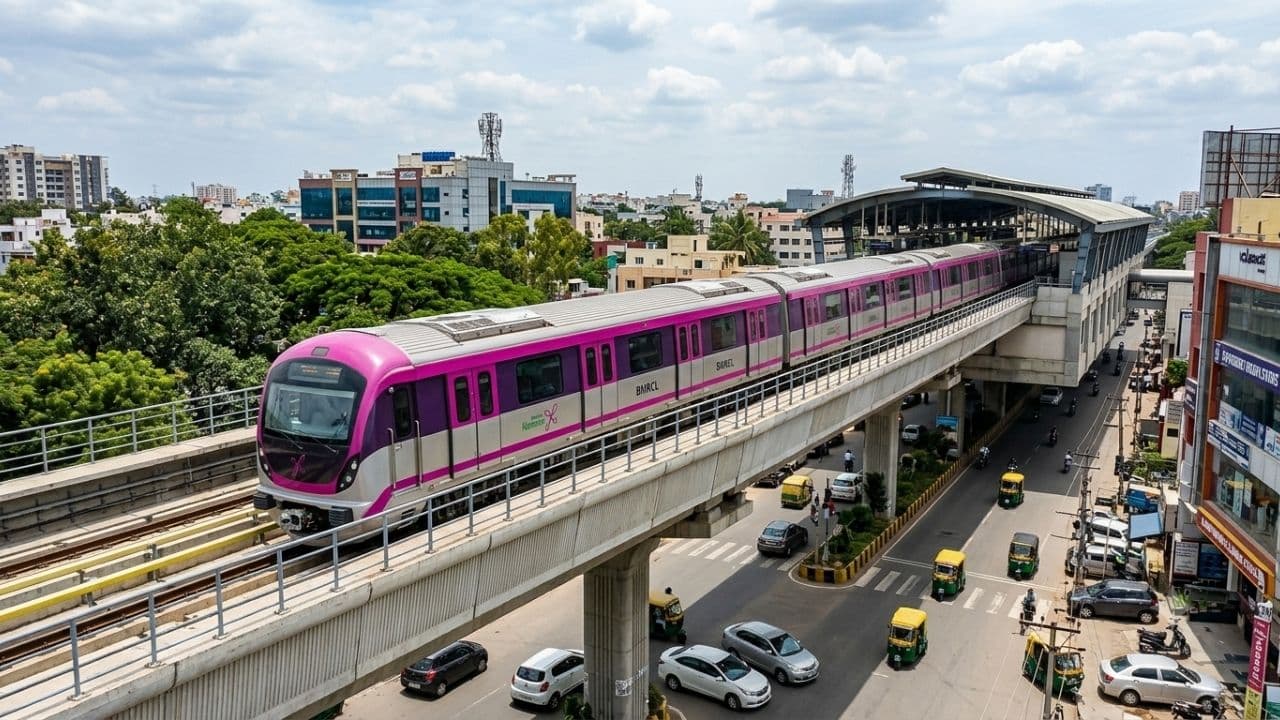

Bengaluru is on the brink of a major milestone in urban mass transit. As per reports, Prime Minister Narendra Modi is scheduled to inaugurate the new stretch of the Bengaluru Metro's Pink Line on November 13. This upcoming launch marks a transformative leap for the city's commuter infrastructure, cementing Bengaluru's status as a leading metropolitan hub with one of the most extensive transit systems in the country.
The Pink Line Expansion and Route Details
The upcoming inauguration centers on a crucial 7.5-km elevated stretch connecting Kalena Agrahara to Tavarekere. Following the formal launch on November 13, Prime Minister Narendra Modi is scheduled to travel on the Pink Line from Tavarekere to Bilekahalli.
This addition provides a massive boost to the city's transit capabilities. With the new segment integrated, Bengaluru's total operational metro network will expand from its previous 96.1 km to an impressive 103.6 km. Urban planners and local commuters anticipate that this extension will significantly streamline travel times and improve overall connectivity across south Bengaluru.
Ascending to India’s Second-Largest Network
The numerical leap to 103.6 km carries substantial strategic weight for the region. This expansion will officially make Bengaluru Metro India's second-largest metro network, trailing only Delhi.
Beyond the immediate launch of the Pink Line, transit authorities have set even broader benchmarks for the future. The state government aims to scale the city's cumulative metro network significantly further, targeting an expansive 170 km by 2027. Such rapid scaling underscores a heavy policy emphasis on mitigating urban congestion and modernizing public mobility alternatives.