
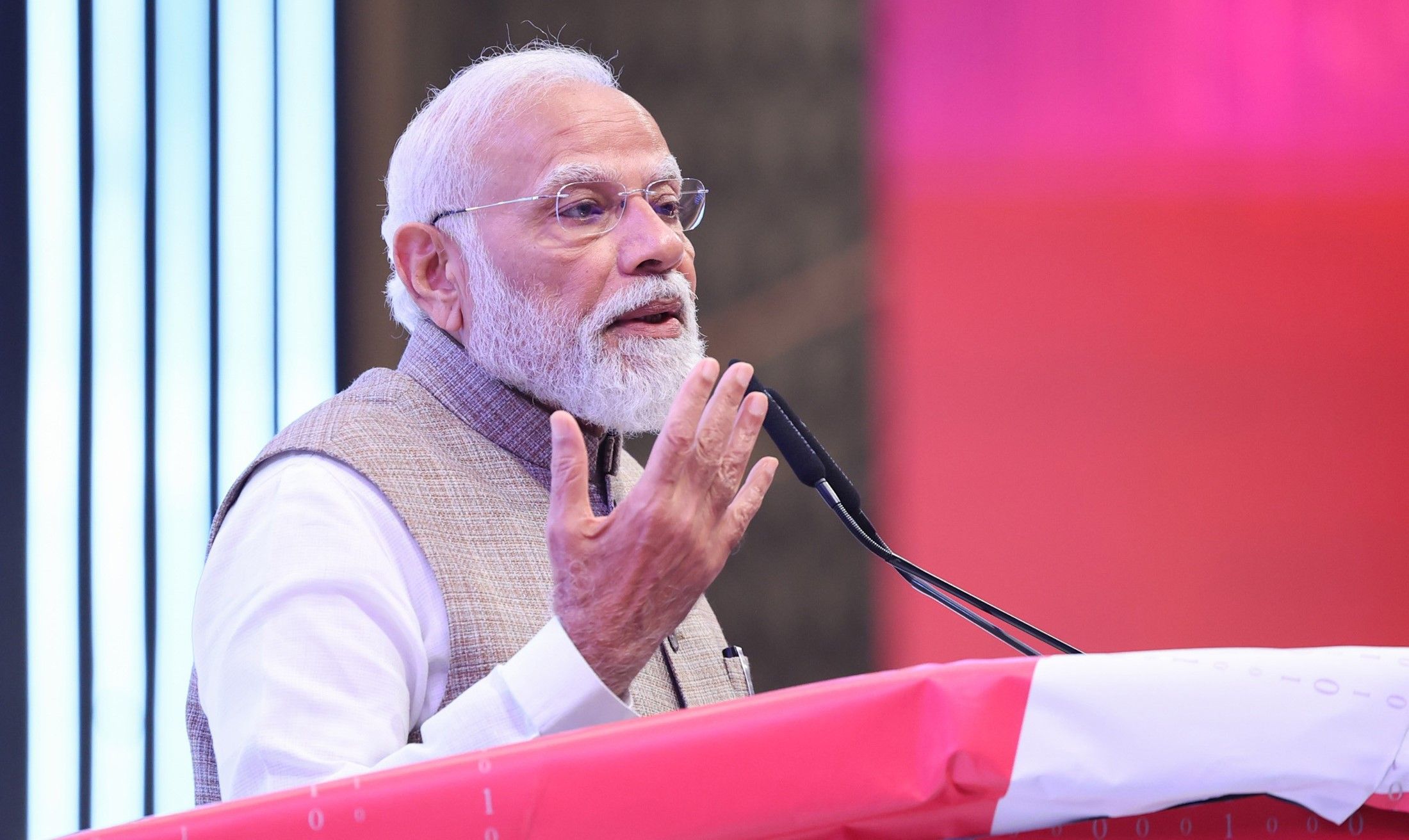

New Delhi: Prime Minister Narendra Modi’s appeal asking Indians to conserve fuel, postpone gold purchases, revive work from home, and avoid unnecessary overseas travel was more than routine public messaging. It was a clear signal that the government is increasingly concerned about mounting economic pressures and external vulnerabilities, particularly those triggered by the outbreak of the Iran-Israel war.
Governments do not casually ask citizens to alter consumption patterns. They do not publicly urge restraint in fuel usage or ask households to delay buying gold unless they see turbulence approaching with unusual clarity. Modi’s remarks this week were therefore not rhetorical caution. They were a calibrated attempt to prepare India for the economic aftershocks of a deepening Iran-Israel conflict that now threatens global energy stability.
The significance of the statement lies not merely in what was said, but in why it was said now.
Crisis At Doorstep
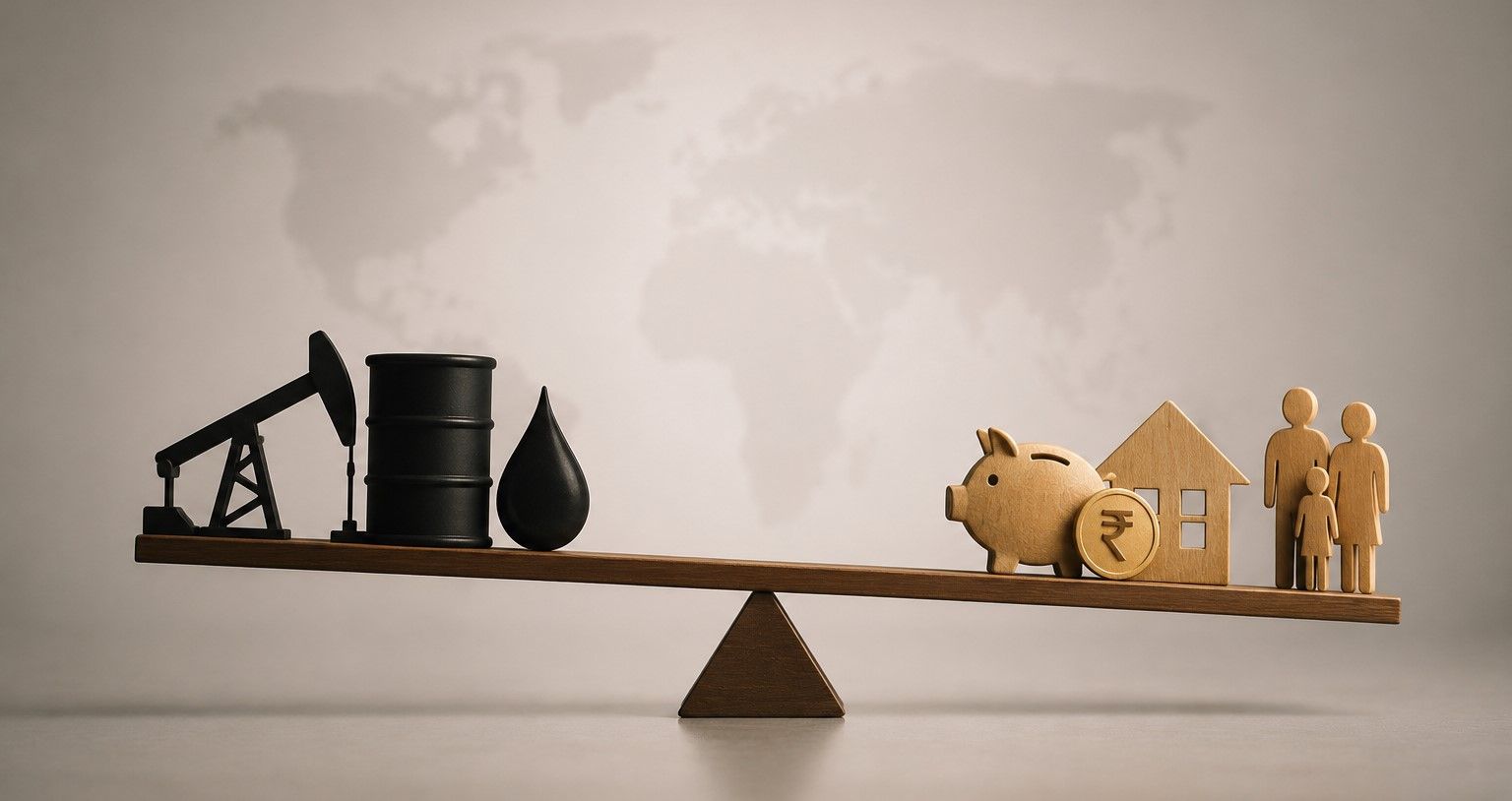
India’s vulnerability to oil shocks is structural. The country imports more than 85% of its crude oil requirement. Every geopolitical tremor in West Asia therefore enters India not as distant diplomacy, but as inflation, higher transport costs, pressure on the rupee and stress on household budgets.
The Iran-Israel confrontation has amplified fears of sustained disruption around the Strait of Hormuz, through which a substantial portion of the world’s oil passes every day. Markets react to uncertainty long before actual shortages emerge. Crude prices surge not only because supplies are disrupted, but because traders anticipate future instability. India, as one of the world’s largest energy importers, invariably pays the price.
This explains Modi’s unusually direct language. “Petrol-diesel has become so expensive across the world,” he said. “It is the responsibility of all of us that the foreign exchange spent on purchasing petrol-diesel should also be saved by conserving petrol-diesel.”
That statement goes to the heart of the crisis. India is not merely battling expensive fuel. It is battling the outflow of dollars needed to buy that fuel. Higher oil prices widen the current account deficit, weaken the rupee and complicate inflation management. Add rising defence expenditures globally and instability in shipping routes, and the pressure becomes far more dangerous for emerging economies.
This is also why Modi linked fuel conservation with work from home and virtual meetings. “Work from home, online conferencing, virtual meetings, we have to again give priority to these,” he said. The appeal may sound administrative on the surface, but its economic logic is precise. Reduced commuting lowers fuel demand. Lower fuel demand reduces import dependence. Reduced imports conserve foreign exchange reserves.
The same principle applies to gold purchases. India remains among the world’s largest gold importers, driven by cultural habits, weddings and investment preferences. Yet gold is bought overwhelmingly in dollars. During periods of external stress, excessive gold imports intensify pressure on foreign exchange reserves.
“In the national interest, we must resolve not to purchase gold for a year,” Modi urged. It was perhaps the most politically difficult appeal in his speech because it directly touched middle-class savings behaviour and social customs. Yet the government clearly believes the situation warrants such intervention.
Economic Patriotism Returns
What is striking is the larger philosophy behind Modi’s appeal. The PM framed economic restraint not as sacrifice imposed by the state, but as civic responsibility during a global crisis.
“Patriotism is not only about the willingness to sacrifice one’s life on the border,” Modi said. “In these times, it is about living responsibly and fulfilling our duties to the nation in our daily lives.”
That formulation matters because India is entering an era where geopolitics and economics are no longer separate realities. Wars now travel through commodity prices, supply chains, shipping insurance, currency markets and food inflation. A missile strike in West Asia can alter the cost of vegetables in an Indian city within weeks. Governments understand this interconnectedness even when ordinary citizens may not immediately recognise it.
Critics may dismiss the Prime Minister’s appeal as alarmist. That would be a mistake. In fact, one reason the statement deserves attention is because governments generally avoid publicly acknowledging economic vulnerability unless the risks are serious. Public messaging of this nature is usually intended to psychologically prepare citizens for a prolonged period of uncertainty.
Nor is India alone in taking precautionary measures.
Across Europe and Asia, governments are reassessing energy security frameworks in response to escalating tensions in West Asia. Japan and South Korea are reportedly reviewing contingency plans linked to fuel supplies and shipping routes. Several Asian economies are scrambling to secure cheaper crude supplies to protect themselves from prolonged volatility. European nations, already bruised by the Ukraine war’s energy fallout, are once again discussing reserve management and emergency preparedness.
The difference is that India’s exposure is deeper because of its sheer dependence on imported energy combined with its massive domestic consumption base.
Hard Truth Arrives
The uncomfortable truth is that modern economies often ignore warning signs until the pain becomes unavoidable. India has seen this before during previous oil shocks, currency crises and inflation spirals. By the time governments impose tougher corrective measures, the economic damage is already widespread.
Modi’s appeal appears designed to avoid precisely that scenario.
If citizens voluntarily moderate fuel consumption, reduce unnecessary dollar-heavy spending and postpone non-essential imports, the government gains valuable room to manage external pressures without resorting to harsher interventions later. Those interventions, if they come, could include steeper fuel prices, import restrictions or tighter fiscal controls.
The positive reactions to the Prime Minister’s statement indicate that at least parts of industry and government understand the seriousness of the moment. Maharashtra Chief Minister Devendra Fadnavis said people had “understood the Prime Minister’s message and will respond to it positively”. Nainesh Pachchigar, Gujarat president of the India Bullion and Jewellers Association, observed that reducing gold imports could help preserve foreign exchange reserves during a period of mounting global uncertainty.
The larger issue, however, is not whether every citizen immediately follows the appeal. The real significance lies in the signal New Delhi is sending: The Iran-Israel war is no longer viewed merely as a foreign conflict. It is now regarded as a direct economic risk to India’s stability.
That assessment is neither exaggerated nor premature. If the West Asia crisis deepens further, oil prices could become the defining economic challenge of the coming months. Inflation would rise. Growth projections would weaken. Household finances would tighten. The rupee could face sustained pressure.
In that context, Modi’s message was less about austerity than preparedness.
And preparedness, in times like these, may prove to be the difference between resilience and economic disruption.