


New Delhi: Online violence against women has crossed a threshold. It is no longer sporadic or incidental; it is systemic, scalable, and increasingly embedded in the architecture of digital platforms. Technology, particularly generative AI, is not merely enabling abuse; it’s industrialising it, with profound consequences for democratic participation.
Targeted online violence against women in public life is increasingly technologically sophisticated and damaging, triggering alarming rates of mental health diagnosis, heightened self-censorship, and more frequent escalation to law enforcement. For women human rights defenders and activists, journalists and media workers, and writers and other public communicators, online violence is often deliberate and coordinated, “aiming to silence them while undermining their professional credibility and personal reputations”, says a report released by UN Women.
This is not simply a gender issue; it is a democratic crisis. When women withdraw, self-censor, or are pushed out, public discourse narrows, accountability weakens, and power becomes less contested.
The report, titled Tipping Point: Online Violence Impacts, Manifestations and Redress in the AI Age, lays bare a disturbing evolution — from harassment to synthetic sexual violence — where abuse is no longer constrained by physical reality. AI has weaponised intimacy itself.
“Generative AI apps are the latest manifestation of this form of subjugation. They do not just ‘nudify’ women and girls instantaneously without their consent, they simulate them being sexually assaulted. AI-assisted ‘virtual rape’ is now at the fingertips of perpetrators,” says the report.
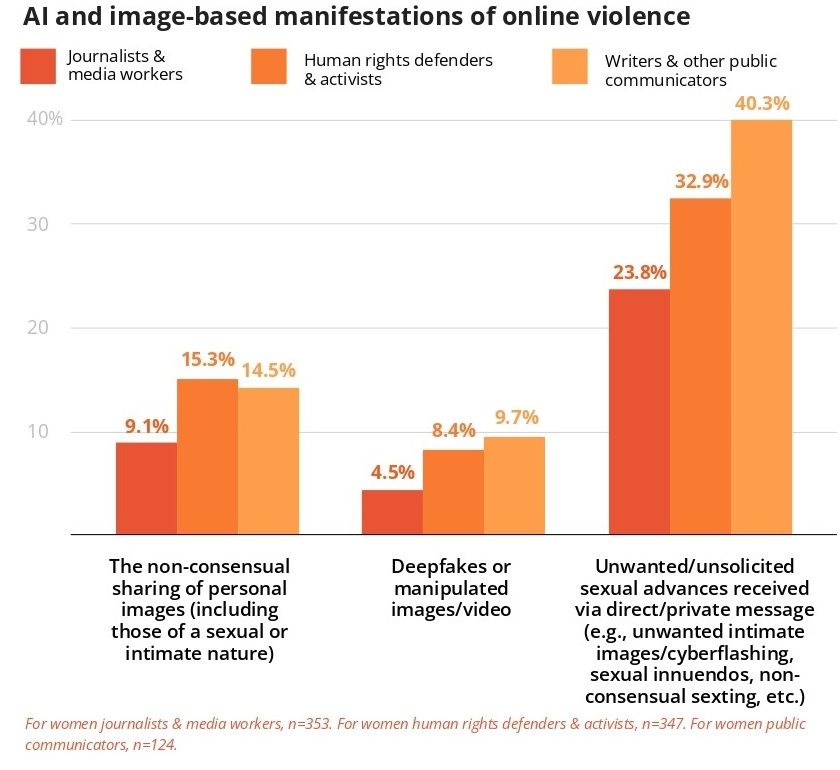
The implications are chilling. Reputation, dignity, and psychological safety can now be destroyed at scale, often anonymously and with minimal cost. According to the report, 12% of women surveyed (641 women from 119 countries) experienced non-consensual image sharing, while 6% were targeted through deepfakes — evidence of how rapidly such technologies have moved from the margins to the mainstream.
This is not technological inevitability; it is a failure of governance. Platforms that profit from engagement have little incentive to curb content that drives clicks, even when it destroys lives.
Chilling Effect
The most insidious impact of online violence is not always visible. It manifests in silence, withdrawal, and diminished ambition. The report’s data reveals a pattern that should alarm policymakers: the internalisation of fear.
“Our survey findings indicate that online violence produces lasting personal harms for many women, with the most frequently reported consequences relating to their mental health and wellbeing. Nearly one-quarter of the women surveyed reported being diagnosed with, or treated for, anxiety and/or depression in connection with their experience of online violence, while 13% had been diagnosed with post-traumatic stress disorder (PTSD),” says the report.
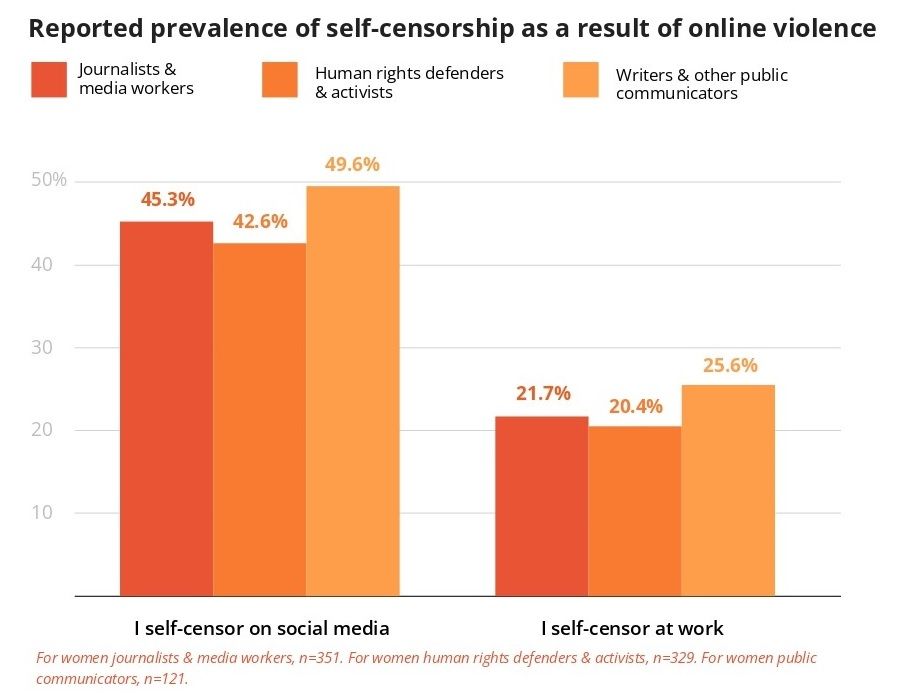
This psychological burden translates directly into democratic loss. A striking 41% of women reported self-censorship on social media. Among journalists, that figure has risen to 45%, a 50% increase since 2020. The trajectory is unmistakable: the louder the abuse, the quieter the voices it targets.
According to the report, self-censorship is often framed as a personal coping mechanism. In reality, it is a systemic outcome. When women begin to pre-emptively limit their speech, the public sphere becomes less representative, less diverse, and ultimately less truthful.
Justice Denied
Despite rising awareness, institutional responses remain inadequate. Reporting rates have increased, but accountability has not kept pace. The report exposes a troubling gap between seeking justice and receiving it.
“While one-quarter of the women respondents had reported their experiences of online violence to law enforcement agencies, only 10% of those who had done so said that charges were successfully brought against their abuser/s. This low rate of charges being filed may be the result of a variety of challenges with investigating online violence,” says the report.
The failure is not merely procedural; it is cultural. Victim-blaming persists, technical capacity is limited, and platforms remain largely unaccountable. The burden of protection is subtly shifted back onto women. Log off… Speak less… Withdraw.
This is the tipping point. Without decisive intervention — legal, technological and cultural — the trajectory will harden into permanence, the report warns. AI-driven abuse will become normalised, and women’s exclusion from public life will deepen, it cautions.
The question is no longer whether online violence is a crisis. It is whether institutions are willing to treat it as one.
(Cover photo by Louis Galvez on Unsplash)