
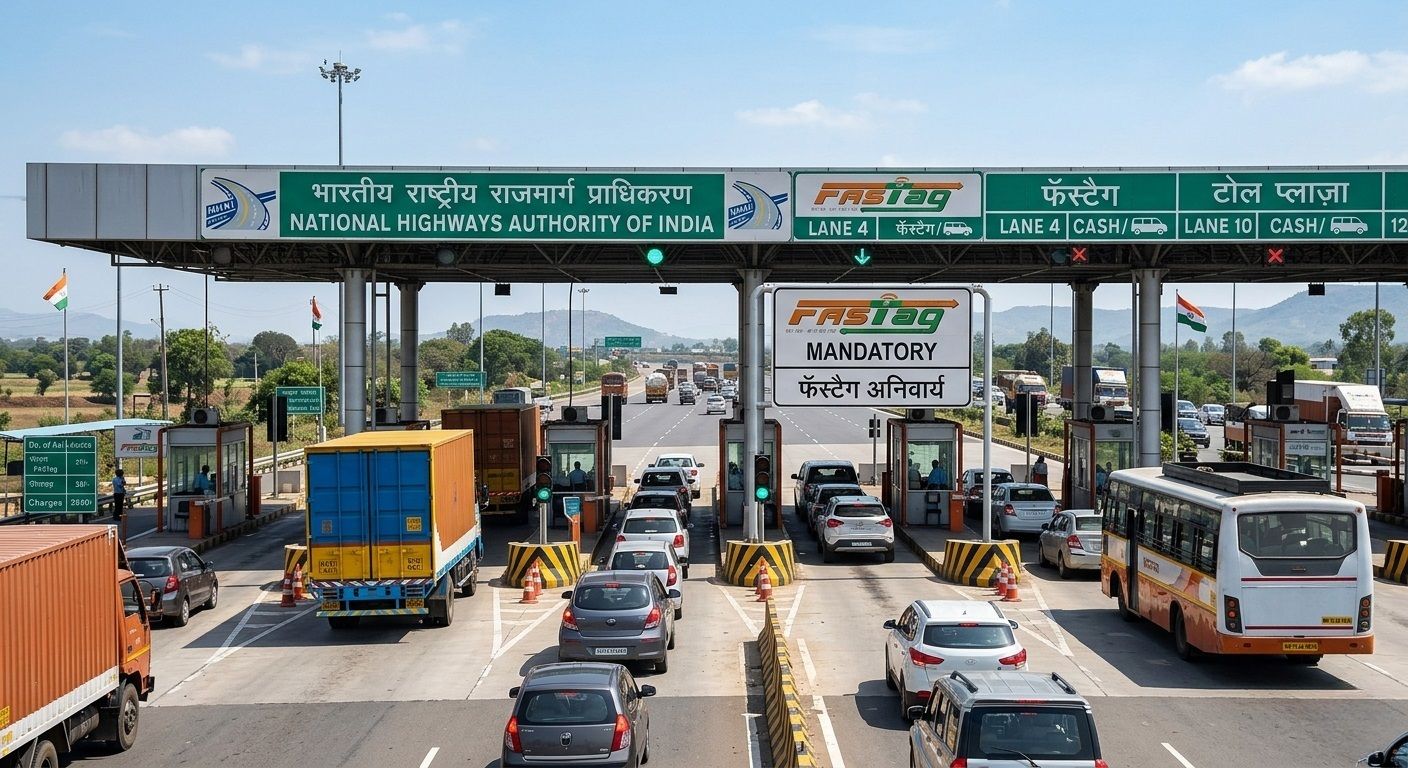

New Delhi: India’s toll road sector is expected to witness moderated growth in toll collections this fiscal amid the ongoing West Asia conflict, which is likely to weigh on commercial traffic movement and broader economic activity.
According to a study by Crisil Ratings covering 91 toll road assets spanning around 10,000 km and accounting for nearly 60% of privately operated concessions, toll collection growth could slow by 150-200 basis points year-on-year during the current fiscal.
The report noted that inflation-linked toll rate hikes and resilient traffic trends are expected to support a recovery next fiscal, while healthy operational performance and controlled leverage are likely to keep the credit profiles of toll road operators stable.
Manish Gupta, Deputy Chief Ratings Officer, Crisil Ratings, says, “Traffic growth, a function of economic expansion, is estimated at 2-4% in the near term. A modest WPI inflation of last year will limit toll rate hikes this fiscal and consequently, toll collection will grow 5-7%. However, next fiscal toll rates may see a steeper increase due to higher WPI inflation, expected this fiscal amid the West Asia conflict. This will drive toll collection growth to 8-10% next fiscal.”
The report highlighted that toll rate revisions are linked to the previous year’s Wholesale Price Index (WPI) inflation, making the sector relatively resilient across economic cycles. Commercial traffic, which contributes around 75% of toll collections, remains the primary revenue driver. However, freight movement tied to industrial output, construction activity and mining operations could face pressure due to geopolitical uncertainties stemming from the West Asia conflict. This trend is already visible in the sequential decline in FASTag toll collections recorded during March and April.
Passenger traffic, meanwhile, has continued to grow steadily on the back of rising vehicle ownership, enhanced road connectivity and improved travel efficiency resulting from better highway infrastructure. Although passenger vehicles contribute a smaller share to total toll revenues, their growth has consistently outpaced commercial traffic in recent years. Improved road quality and expanding expressway connectivity are expected to sustain this momentum, while the segment remains comparatively insulated from geopolitical disruptions.
Despite overall stable traffic growth, around one-fourth of the assets in Crisil Ratings’ sample witnessed a decline in traffic during the last two fiscals. Diversion of vehicles to newly developed highways and expressways affected nearly 12% of the assets. Another 12% faced pressure from factors such as heavy monsoons, sand mining bans, traffic normalisation after temporary surges, and feeder route issues.
The report also underscored the stabilising effect of infrastructure investment trusts and pooled asset portfolios on the sector’s financial profile. More than 80% of the assets in the sample are part of InvIT structures or pooled portfolios, allowing diversification benefits to offset individual asset-level challenges.
“Notably, more than 80% of the assets from Crisil Ratings sample are a part of infrastructure investment trusts (InvITs) or pooled portfolios. Consequently, diversity of assets helps cushion the impact. Controlled leverage maintained under the InvIT structure, along with resilient operating performance, will keep the debt service coverage ratio of toll road assets strong at ~1.5 times this fiscal and the next. Consequently, credit profiles will remain stable,” says Anand Kulkarni, Director, Crisil Ratings.
The report further noted that policy interventions have had a manageable impact on toll revenues. The introduction of an annual pass for non-commercial passenger vehicles, effective August 15, 2025, resulted in a 5-7% impact on overall toll collections during the last quarter of fiscal 2026. However, compensation mechanisms from the authority to concessionaires have helped preserve credit stability.
Crisil cautioned that any significant deterioration in the macroeconomic environment arising from the West Asia conflict, particularly one that sharply affects commercial traffic movement, will require close monitoring going forward.