
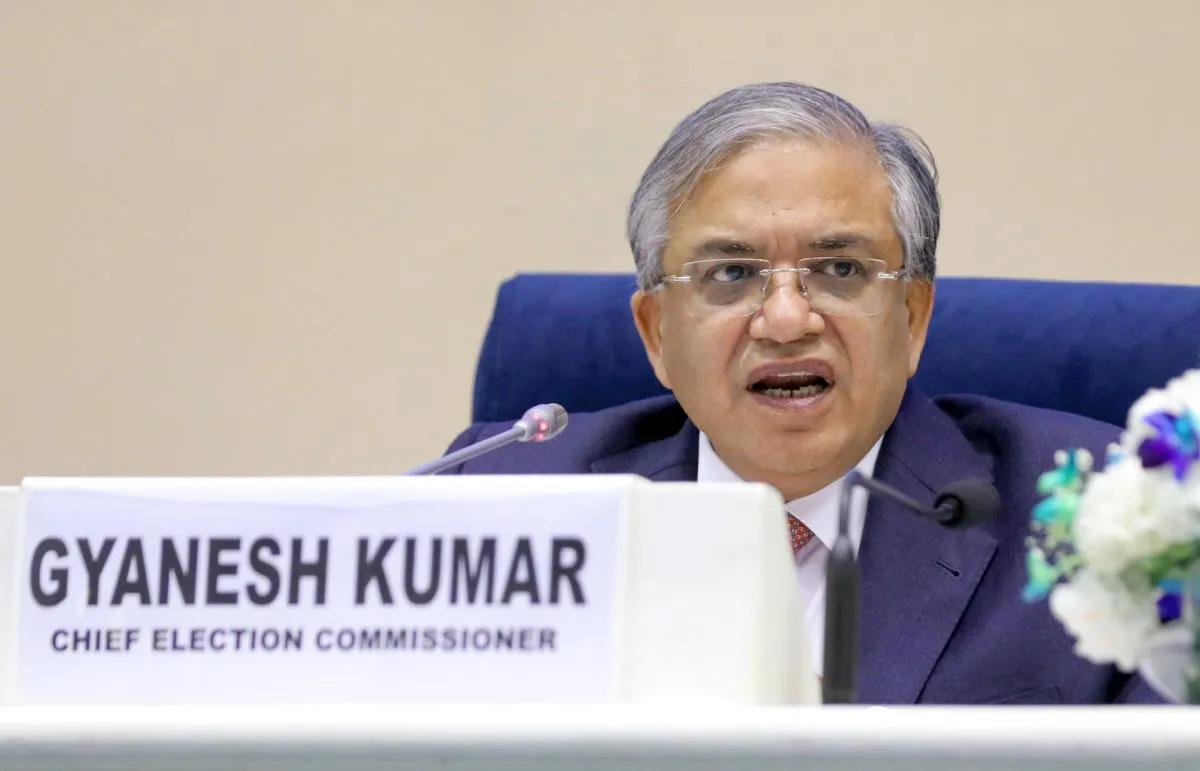

The Supreme Court of India has agreed to hear a significant public interest litigation next week concerning the leadership and administrative decisions of the Election Commission. As per reports, the apex court will examine a plea that raises serious doubts over Chief Election Commissioner (CEC) Gyanesh Kumar's decisions and seeks his suspension.
Challenging Unilateral Decisions and ECI Governance
The core of the legal challenge revolves around the manner in which key decisions within the poll panel were allegedly executed. According to reports, the petition accuses the CEC of taking unilateral actions. Specifically, the litigation challenges decisions purportedly made without the requisite approval or consensus of the other two Election Commissioners, Sukhbir Singh Sandhu and Vivek Joshi.
Legal observers note that the petition places the internal mechanics of the country's electoral watchdog under intense judicial scrutiny, questioning whether administrative protocols within the Commission were appropriately followed.
The Controversy Over the Special Intensive Revision (SIR)
Beyond broader governance concerns, the petition brings the Special Intensive Revision (SIR) of electoral rolls directly into question. The plea specifically challenges the decision-making processes and the implementation timeline surrounding the nationwide SIR.
Critics and petitioners have raised red flags over how these extensive roll revisions were ordered and processed. However, the Election Commission has consistently maintained its stance against these allegations, asserting publicly that all decisions related to the SIR were adopted unanimously by the panel.
Legal and Institutional Next Steps
With the Supreme Court officially agreeing to list the matter for hearing next week, all eyes will be on the bench as it evaluates the arguments regarding transparency, collective decision-making, and administrative authority within the poll body. The upcoming proceedings are expected to test the boundaries of judicial review regarding the internal functioning of constitutional authorities.