
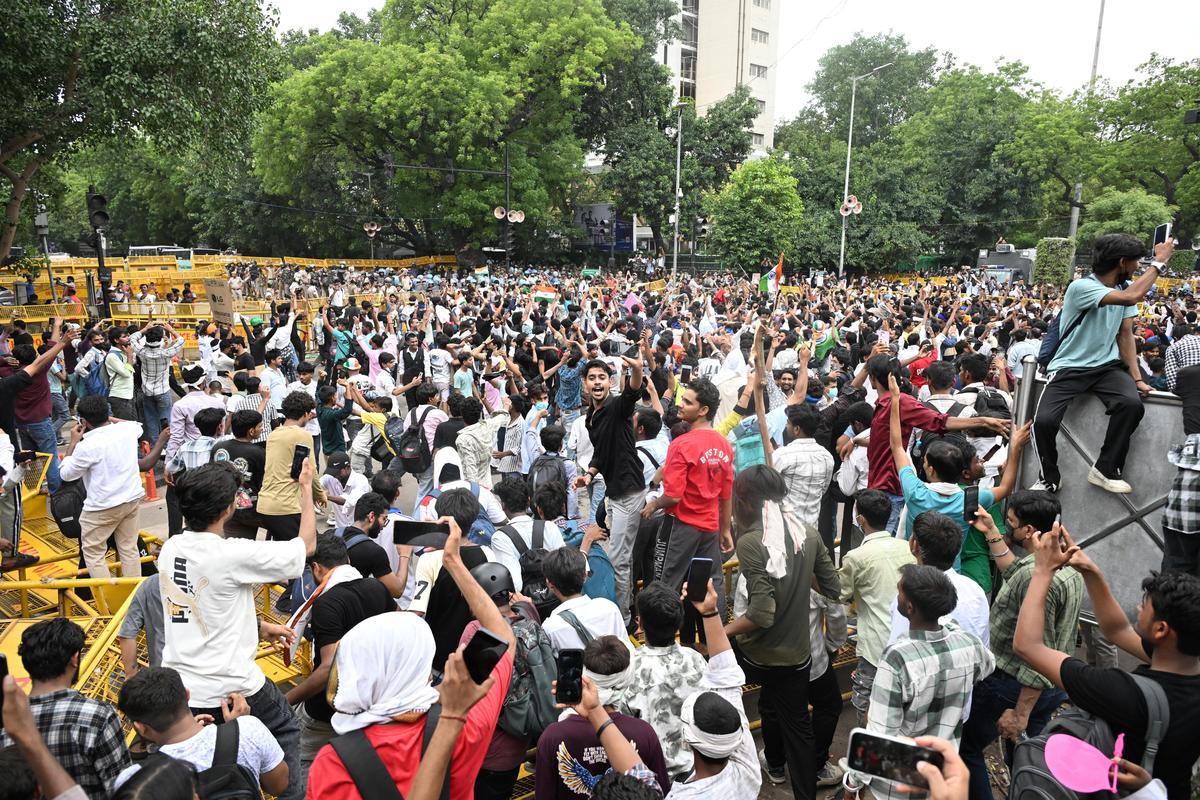

The Supreme Court of India has intervened decisively in the legal fallout from recent civil unrest, quashing First Information Reports (FIRs) registered across the country in connection with the July protests led by the Cockroach Janata Party (CJP). Invoking its extraordinary constitutional powers, the apex court granted relief to the student protesters while shaping specific exemptions.
Invoking Article 142 Nationwide
In a sweeping directive issued on Tuesday, the Supreme Court utilized Article 142 of the Constitution to quash all student-protest FIRs nationwide, spanning across five states. According to reports, the bench specifically applied Article 142 to provide blanket relief.
However, the judicial clemency came with distinct boundaries. The Supreme Court explicitly exempted individuals with criminal records from the scope of the quashing order, ensuring that ongoing legal scrutiny remains on habitual offenders.
Withdrawal of the September 5 India Gate March
Following the Supreme Court's intervention to clear the legal dockets of the July 20-25 CJP student protests, organizers have altered their mobilization strategy. According to reports, the previously announced September 5 march has been officially called off. The judicial resolution of the contentious FIRs removed the immediate catalyst for the large-scale demonstration.