
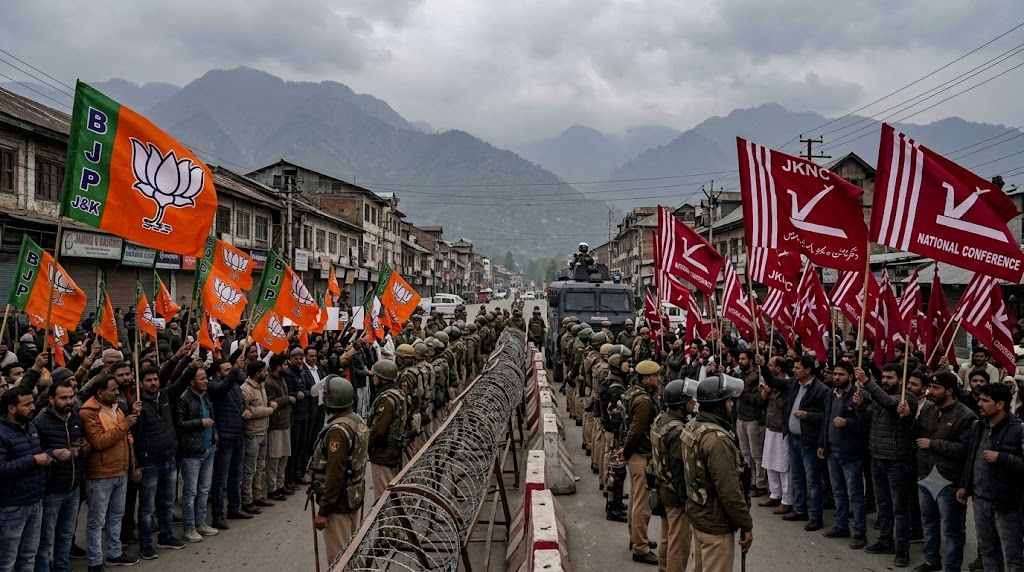

The political landscape of Jammu and Kashmir faces mounting friction as competing demonstrations highlight deep-seated grievances across the region. Identity politics, fragmentation and contestation have long shaped the region's complex political and social landscape. Today, these underlying tensions are once again playing out in the public sphere as rival political factions mobilise their supporters over critical governance and socio-economic concerns.
Rival Protests and Core Grievances
The current wave of demonstrations centers heavily on contentious local matters, specifically employment, recruitment procedures, and statehood-related issues. Major political entities have taken to the streets to press their respective agendas, leading to a direct clash of political wills.
- The Bharatiya Janata Party (BJP) and the Jammu and Kashmir National Conference have emerged as the primary rival forces staging opposing protests.
- Public demonstrations focus acutely on economic survival, job creation, and the political future of the region's governance structure.
- These competitive demonstrations echo historical patterns of contentious politics in the state, where divergent political groups utilize street mobilization to articulate their demands.
Security Tightened Around Party Offices
In response to the escalating face-off between rival factions, administrative authorities have significantly ramped up security measures. Security forces have been heavily deployed, particularly tightening cordons and checkpoints around Bharatiya Janata Party offices to prevent potential clashes or breaches of public order.
While nonviolent political movements and protests have historical precedence in the region, documented extensively in academic literature tracking conflict escalation and civil protest, authorities remain vigilant against the risk of civil unrest spiraling out of control amid heightened political polarization.
Historical Context of Contention
The intractability of political confrontation in Jammu and Kashmir is deeply rooted in long-standing governance contradictions and historical grievances. The current mobilization around recruitment and statehood represents the latest chapter in a long history of competitive political posturing in the territory.