
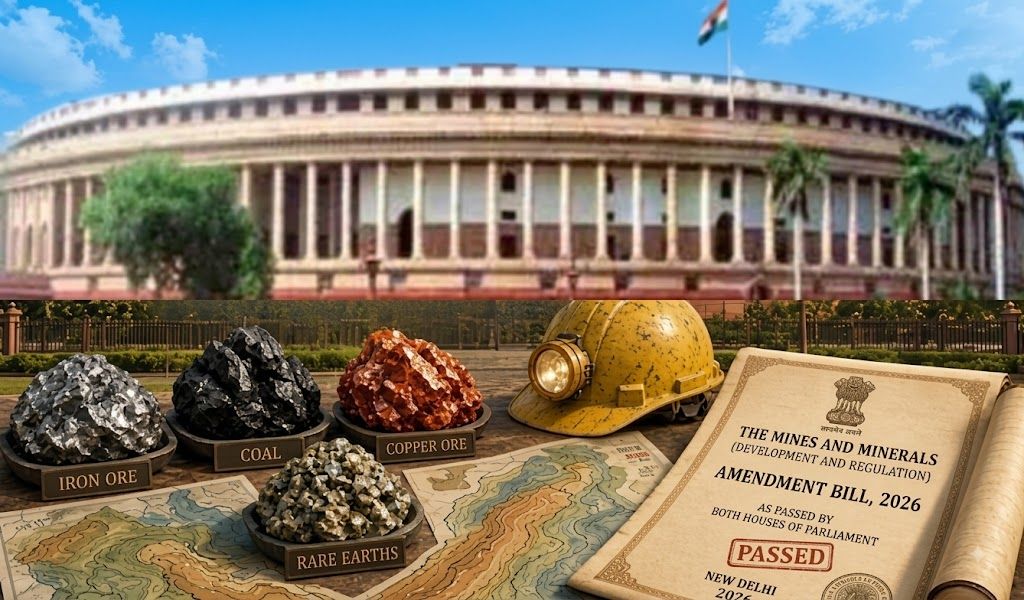

The Indian Parliament has officially passed the Mines and Minerals Amendment Bill, 2026, marking a significant milestone in the country's public finance and natural resource management. As per reports, the legislation brings changes in regulatory frameworks for critical minerals, captive mines, and mining leases.
Limiting States' Powers and Reforming Taxation
The newly passed legislation introduces a noticeable shift in the balance of fiscal authority between the Union and the states. According to reports, the amendment effectively limits states' powers to tax mineral rights on major minerals such as coal and iron ore.
By introducing uniform national rates for major minerals, the Centre aims to streamline the taxation framework across the country. However, the legislative framework maintains a distinct boundary by retaining state control over 49 minor minerals, ensuring that local administrative oversight remains intact for smaller-scale extraction activities.
Boosting Critical Minerals and Exploration
Beyond taxation adjustments, the legislative package places heavy emphasis on the future of the nation's industrial supply chains. The MMDR Bill 2026 is designed to aggressively boost critical minerals exploration.
The reforms institute key structural modifications affecting mining leases and captive mines. These adjustments are intended to accelerate domestic exploration capabilities, positioning the mining sector to better support high-technology manufacturing and national infrastructure demands. Following its clearance in the Lok Sabha, the bill's passage through Parliament solidifies a modern roadmap for resource allocation.