
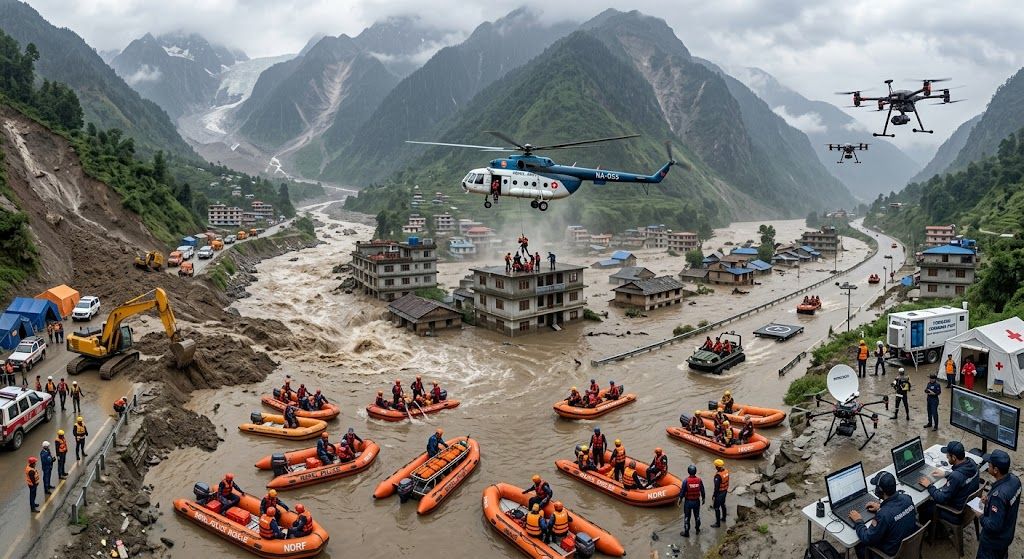

Following devastating floods in the Himalayan region, Nepal has clarified its position on international assistance, denying initial claims of rejecting support while explicitly drawing a line on the type of aid required. As the death toll from the glacier-triggered floods climbs, the country has appealed for specialised foreign help, specifically targeting neighbours like India and China for crucial infrastructure logistics, including 42 Bailey bridges, while maintaining that domestic search-and-rescue personnel are successfully managing operations on the ground.
Navigating the Disaster Response
The unfolding humanitarian situation highlights the immense scale of destruction across the region. According to reports, the death toll resulting from the glacier-triggered flood has reached 633. Despite the high casualties and severe property damage, government officials have emphasized that local rescue efforts are under control. Domestic rescue teams are coping with the crisis, leading authorities to decline offers for external search-and-rescue squads.
Turning to Technical and Infrastructural Aid
Rather than manpower, Kathmandu has directed its international outreach toward technical expertise and heavy logistical recovery. Nepal is seeking help from India and China to procure 42 Bailey bridges to restore connectivity across washed-out terrain. This strategic pivot clarifies earlier reports, with officials asserting that the nation is not rejecting foreign aid outright, but rather streamlining it toward specialised technical applications necessary for long-term stabilization and reconstruction.
Regional Coordination and Recovery
The decision to lean on immediate regional partners like India and China underscores the diplomatic and logistical framework governing Himalayan disaster management. By focusing strictly on technical foreign aid, such as engineering hardware and expert consultation, Nepal aims to rebuild critical transport corridors without encumbering local disaster zones with redundant foreign rescue units.