
New Delhi: The Middle East situation lays bare a rapidly intensifying humanitarian catastrophe stretching from Iran to the Levant, where millions are being uprooted, aid systems are buckling, and a dangerous funding vacuum threatens to turn an already grave emergency into what officials warn could become a “crisis within a crisis”.
At the epicentre lies Iran, where as many as 3.2 million people are now internally displaced, a staggering figure that underscores the scale of upheaval triggered since late February after the war started. While cross-border movements into Türkiye — about 68,600 entries — remain below pre-conflict norms and appear largely precautionary, the internal reality is far more severe. Civilians are reporting damaged homes, loss of income, and collapsing access to healthcare, with emergency systems already under strain. “Many requested assistance to relocate to safer areas,” the report notes, capturing a growing desperation among families trapped in unsafe conditions.
The humanitarian distress is particularly acute among vulnerable groups. Over 45,500 Afghan refugees inside Iran have already required assistance ranging from legal aid to psychosocial support, reflecting the layered nature of displacement in a region where refugee populations were already under pressure before the current escalation.
Lebanon In Deep Crisis
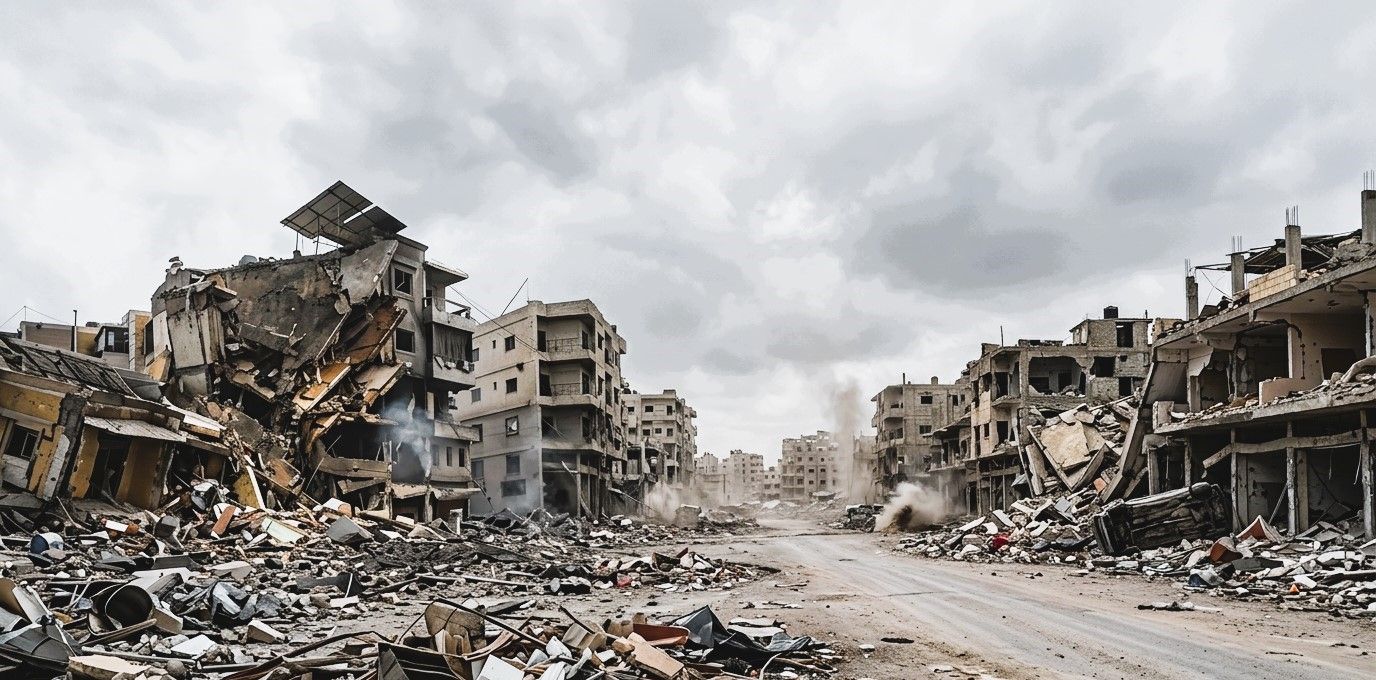
Nowhere is the human toll more visible than in Lebanon, where relentless airstrikes and shifting military realities have displaced more than 1.04 million people, roughly 35% of them children. Entire communities have been uprooted, with over 136,000 people crammed into 669 collective shelters, many operating at or beyond capacity.
The violence has been deadly. Official figures cited in the UNHRC report confirm 1,318 fatalities and 3,935 injuries as of early April, with strikes even hitting areas around shelters. Survivors speak of fear that never subsides. Aid workers report “heightened fear, acute stress reactions, and sleep disturbances, particularly among children”, painting a grim psychological landscape alongside the physical destruction.
Infrastructure damage has compounded the crisis. In some shelters, shattered windows and structural damage have left over 1,200 displaced people exposed to the elements, forcing emergency repairs in already overstretched facilities. Despite efforts that have delivered more than 202,000 essential relief items, the report concedes that “additional shelter capacity remains constrained”, a stark indication that the system is nearing breaking point.
Across borders, the crisis is feeding into a complex web of forced returns and secondary displacement. More than 221,000 people have crossed from Lebanon into Syria, including over 31,700 Lebanese nationals — an extraordinary reversal of typical migration patterns. Of these, more than 54,440 Syrians have indicated intentions to return permanently, raising serious concerns about the sustainability and safety of such movements.
Meanwhile, the Afghanistan-Pakistan corridor has emerged as another flashpoint. Over 57,700 Afghans have returned amid escalating tensions, with 115,000 people newly displaced by cross-border hostilities. The UNHRC report highlights severe shortages of shelter, food, and healthcare, alongside protection risks including trauma, family separation, and heightened vulnerability for women and children.
Conditions are further aggravated by policy measures and enforcement actions. In Pakistan, intensified crackdowns on undocumented Afghans have led to arrests, deportations, and families being forced into makeshift roadside camps. The UNHRC report mentions that refugee families were left stranded in tents after fleeing under police pressure, an image emblematic of a crisis where displacement is increasingly cyclical and inescapable.
Stark Funding Gap
Yet even as needs surge, the financial response is faltering. The report outlines a stark funding gap: Lebanon’s humanitarian response is only 14% funded against a requirement of $472 million, while broader regional operations face similar shortfalls. In South-West Asia, just 15% of the required $454 million has been secured.
The implications are dire. The report warns that without urgent injections of funding, “UNHCR’s ability to scale up preparedness, protection and response will be critically constrained”, effectively leaving millions without adequate support at a time when their needs are escalating most rapidly.
The UNHRC report highlights a deeply interconnected regional crisis. One where conflict, displacement, and policy responses are feeding into each other, amplifying human suffering across borders.
As one humanitarian worker put it in stark terms: “The needs are rising faster than the response.”
In a region already accustomed to protracted crises, this latest escalation is testing the limits of resilience — of institutions, of communities, and most of all, of the millions now caught in its path.
IRAN-ISRAEL WAR
Middle East displacement crisis spirals

Chinmay Chaudhuri
Author
Published
UNHRC report warns 3.2 million displaced, shelters overwhelmed, returns rising, and critical funding gaps threatening to deepen a regional humanitarian catastrophe