
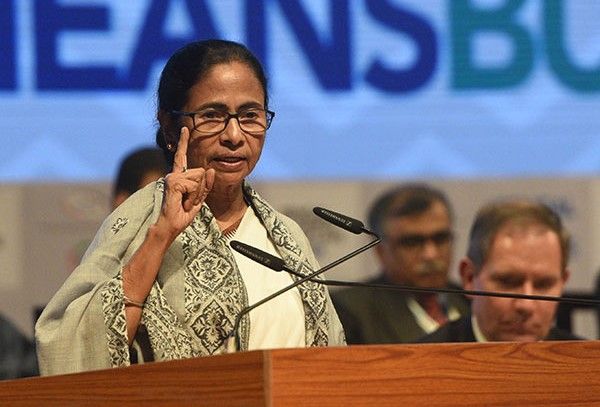

New Delhi: The Bengal electoral defeat has done more than dislodge the All India Trinamool Congress from a position of comfort. It has fundamentally altered the psychological balance of Bengal politics. For nearly a decade and a half, Mamata Banerjee governed not merely through organisational strength but through the perception of inevitability. That perception now lies shattered.
The scale of the setback has triggered a level of introspection inside the Trinamool rarely seen in public. Senior leaders who once defended every strategic decision of the leadership are privately questioning whether the party drifted too far from its original political character. District units are openly blaming one another for the collapse. A visible divide has emerged between old-guard loyalists and a younger faction associated with Mamata’s nephew Abhishek Banerjee’s rise within the organisation.
The verdict reflects more than ordinary anti-incumbency. Bengal’s voters appear to have delivered a cumulative judgment on governance fatigue, corruption allegations, unemployment, centralised control and the increasingly aggressive local political culture associated with sections of the ruling establishment. The anger was not confined to urban constituencies. Rural discontent, once cushioned by welfare schemes and grassroots patronage networks, surfaced with unusual force.
For years, the Trinamool relied on Mamata Banerjee’s personal appeal to absorb institutional damage. That formula has weakened considerably. The leader who once symbolised resistance against entrenched power is now being viewed by many voters as the face of the establishment itself. In Bengal’s political history, that transition has often marked the beginning of decline.
Political scientist Biswanath Chakraborty observed during a televised discussion shortly after the results that “the Trinamool’s biggest problem is the erosion of emotional connection with sections of its traditional support base”. His observation reflects the deeper political transformation now unfolding across Bengal. Elections can be recovered from; emotional disengagement is far harder to reverse.
The BJP’s rise has intensified this vulnerability. Earlier, anti-Trinamool sentiment remained fragmented between the Left, Congress and smaller regional forces. The latest verdict suggests a consolidation of opposition energy behind a single challenger. That changes the political arithmetic dramatically for Mamata.
The fear inside the Trinamool is no longer limited to one electoral defeat. It is the possibility that the “aura of permanence” around the party has disappeared.
Abhishek Under Fire
No leader within the Trinamool has come under sharper scrutiny than Abhishek Banerjee. For several years, he was projected as the party’s modernising force — articulate, media-savvy and organisationally aggressive. Today, sections within the party are holding him directly responsible for accelerating internal alienation.
The criticism operates on multiple levels. Senior leaders argue that the concentration of power around a small leadership circle weakened district-level political instincts. Others believe the growing perception of dynastic succession damaged the party’s credibility among floating voters. Bengal’s electorate has historically admired charismatic authority but remained sceptical of overt hereditary politics.
Abhishek’s political ascent also unsettled older power centres inside the organisation. Many veterans felt bypassed as younger leaders close to him gained prominence in both government and party structures. The result was simmering resentment that remained hidden while the Trinamool continued winning elections decisively. Defeat has now brought those tensions into the open.
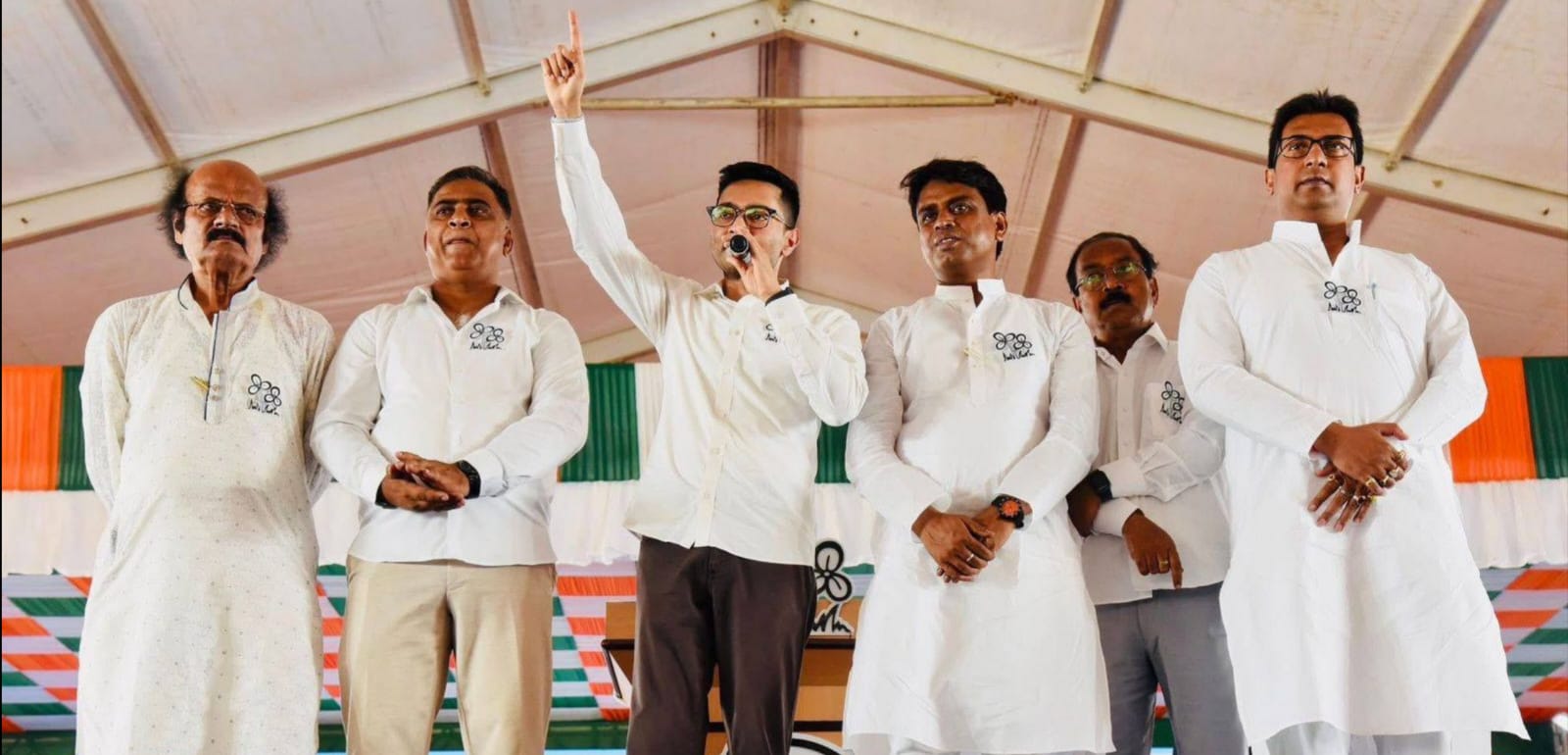
Several sections within the Trinamool Congress are holding Mamata’s nephew Abhishek Banerjee directly responsible for accelerating internal alienation. His political ascent unsettled older power centres inside the organisation. (Source: AITC website)
Political commentator Joydeep Mukhopadhyay remarked during a panel discussion at Kolkata Press Club last week that “once a ruling party loses heavily, succession politics becomes unavoidable, and every leadership decision begins to face retrospective scrutiny”. That process is now clearly underway inside the Trinamool.
Yet the backlash against Abhishek also reveals a deeper contradiction. Despite the criticism, he remains one of the few leaders in the party capable of statewide mobilisation and national-level articulation. Several younger legislators still see him as essential for rebuilding the organisation after the defeat. This has created a curious internal dynamic: he is simultaneously blamed for the crisis and viewed as indispensable for recovery.
The broader political challenge for the Trinamool is that the allegations damaging its credibility cannot be separated from governance itself. Recruitment controversies, accusations involving local extortion networks (syndicates), complaints of political intimidation and repeated corruption charges steadily eroded public confidence. Opposition campaigns succeeded because they connected these issues directly with everyday frustrations among voters.
Abhishek Banerjee became the focal point of anger partly because he symbolised the next generation of leadership. In moments of political collapse, voters and party workers alike search for accountability in those projected as future inheritors of power.
Whether fairly or unfairly, he now carries that burden.
Didi’s Hardest Battle
Mamata has survived political crises before. She fought isolation within the Congress, challenged the Left Front at the peak of its dominance and repeatedly overcame predictions of political extinction. That history explains why even her critics hesitate to dismiss her entirely.
But the present crisis is qualitatively different from her earlier struggles. Previously, she fought from the position of an insurgent outsider. Today, she confronts public exhaustion associated with prolonged incumbency. The emotional energy that once fuelled her politics has visibly diminished.
The immediate concern for the Trinamool leadership is organisational fragmentation. Whenever dominant regional parties begin losing authority, factional calculations intensify rapidly. Local leaders start securing independent political futures, ideological coherence weakens and discipline becomes increasingly difficult to enforce. Signs of that transition are already visible within the Trinamool.
The challenge is especially serious because the party’s structure has long revolved around Mamata’s personal command. Unlike cadre-driven formations with deep ideological institutions, the Trinamool evolved primarily as a leadership-centric movement. Such parties often struggle during moments of succession uncertainty or leadership fatigue.
Political analyst Udayan Bandyopadhyay said in a televised interview after the election outcome that “Trinamool Congress must now decide whether it wants to remain a personality-driven machine or become a structured political organisation capable of surviving beyond one leader”. That question may define Bengal’s politics over the next decade.
There are also larger national implications. Mamata had positioned herself as one of the principal opposition faces against the BJP nationally. A weakened Trinamool reduces her bargaining power within opposition alliances and reshapes the balance of regional politics across eastern India.
Yet, writing off the party entirely would still be premature. The Trinamool Congress retains a substantial social base among women voters, beneficiaries of welfare programmes and sections of rural Bengal. Its grassroots machinery, despite visible damage, remains extensive. Bengal’s political landscape has historically produced dramatic reversals, and regional parties have often recovered from periods of decline.
What has undeniably changed, however, is the perception of permanence. The election has ended the belief that Mamata Banerjee’s authority in Bengal is politically unchallengeable. Once that certainty disappears, every defeat appears larger, every internal rebellion becomes more dangerous and every succession debate acquires sharper edges.
The Trinamool Congress is no longer confronting a routine electoral setback. It is confronting the possibility of political transition in a state where power, once weakened, rarely returns in the same form again.
(Cover photo: Wikimedia Commons)