
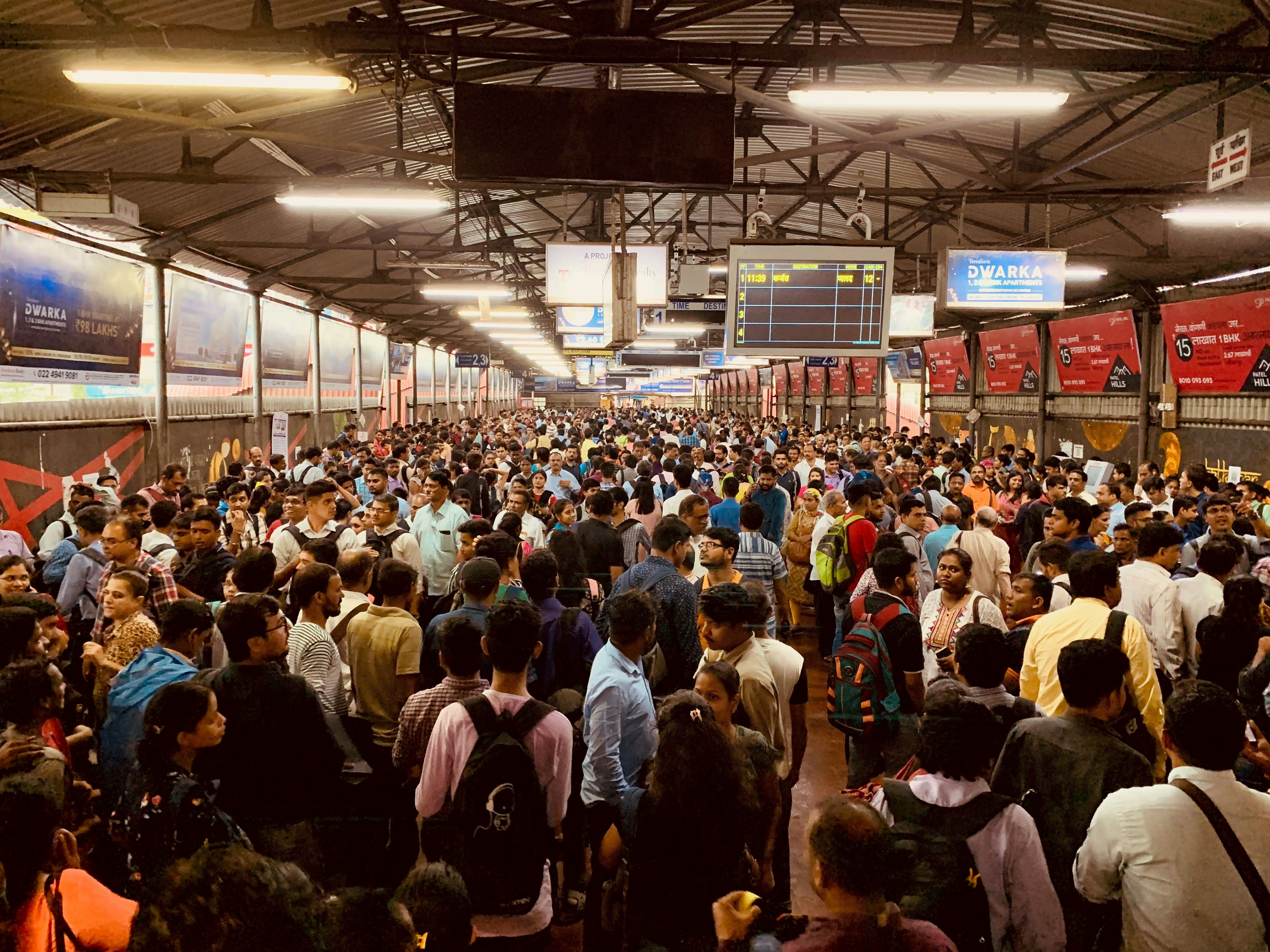

New Delhi: India is entering a new demographic era far sooner than policymakers once expected. The latest Sample Registration System (SRS) Bulletin for 2024 shows the country’s Total Fertility Rate (TFR) slipping to 1.9, below the replacement benchmark of 2.1 needed to sustain population levels over generations. The development marks a historic shift for a country long defined by fears of population explosion.
But the bigger story lies beneath the national average. India is no longer moving demographically at one speed. Southern and western states are witnessing sharply declining fertility, ageing populations and weakening natural growth, while large northern states continue to record significantly higher birth rates and younger populations.
The demographic imbalance is emerging at a politically charged moment, with the debate over delimitation and parliamentary representation gaining momentum. States that successfully controlled population growth through decades of investment in education, healthcare and family planning now fear losing political influence to faster-growing states in the Hindi belt.
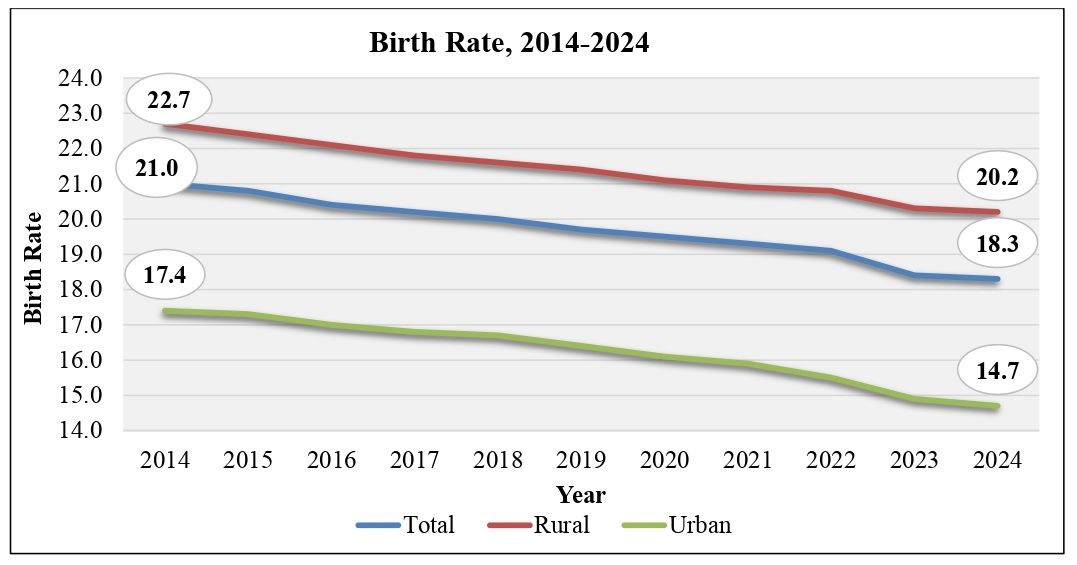
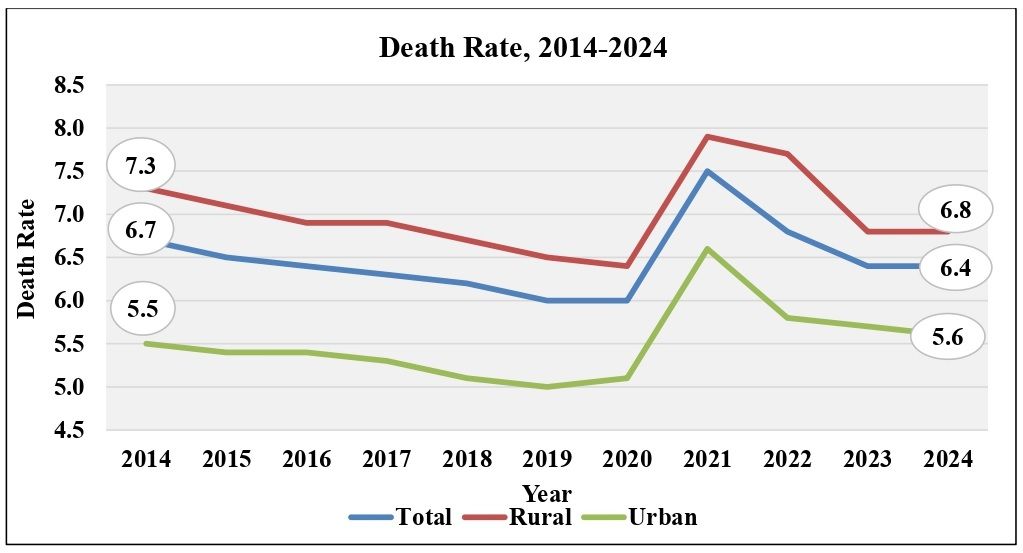
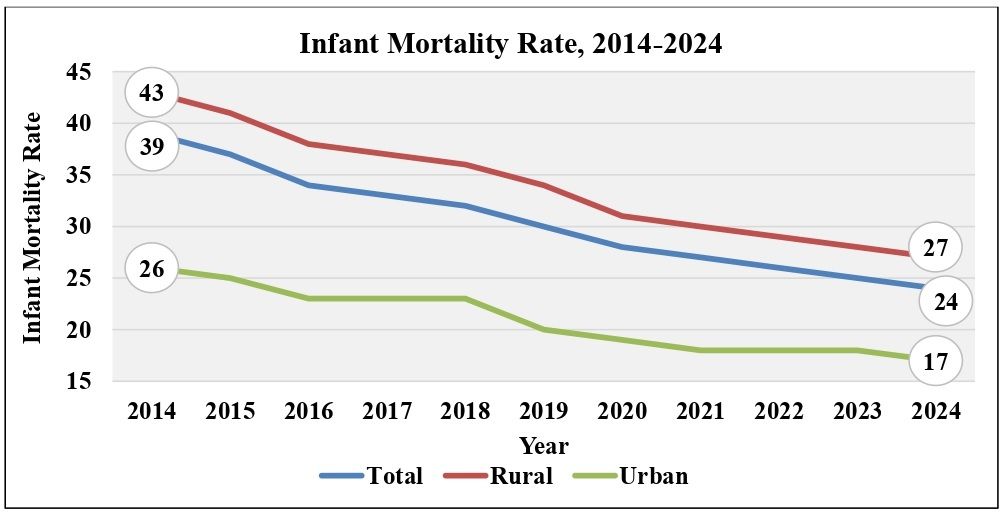
The data reflects the scale of India’s demographic transformation. The crude birth rate has fallen from 36.9 births per 1,000 population in 1971 to 18.3 in 2024. Over the past decade alone, it declined from 21 in 2014. India’s death rate has dropped to 6.4, while infant mortality has fallen dramatically to 24 deaths per 1,000 live births, compared with 129 in 1971.
The numbers confirm that India has moved decisively into the later stages of demographic transition. However, the transition is unfolding unevenly, producing stark regional contrasts with long-term economic and social implications.
Regional Reality Check
The southern states now resemble ageing middle-income societies more than rapidly expanding developing regions. Kerala has recorded the country’s lowest birth rate among major states at 11.1, followed closely by Tamil Nadu at 11.6. Maharashtra’s birth rate stands at 13.8, West Bengal’s at 13.9 and Karnataka’s at 14.9 — all well below the national average.
The fertility data paints an even sharper picture. Delhi’s TFR has fallen to just 1.2, the lowest in the country. Kerala, Tamil Nadu and West Bengal are at 1.3, while Maharashtra, Andhra Pradesh and Punjab stand at 1.4. Telangana and Karnataka have reached 1.5, reflecting rapidly shrinking family sizes.
Natural population growth in these states has weakened substantially. Kerala’s natural growth rate has declined to 3.9, Tamil Nadu’s to 4.8 and Punjab’s to 6.5. Maharashtra, Karnataka and Andhra Pradesh also remain far below the national average of 11.9.
The situation is markedly different in northern and central India, where fertility levels remain comparatively high. Bihar continues to record the country’s highest birth rate at 26.8 births per 1,000 population. Uttar Pradesh follows at 23.5, while Rajasthan and Madhya Pradesh remain above 22.
Natural growth rates in these states continue to outpace the national average by a wide margin. Bihar’s natural growth rate stands at 20.8, while Uttar Pradesh records 17.2. These figures are several times higher than those seen in Kerala and Tamil Nadu.
The rural-urban divide remains another defining feature of India’s population pattern. India’s rural birth rate stands at 20.2, compared with 14.7 in urban areas. Rural fertility remains at replacement level with a TFR of 2.1, while urban India has already declined to 1.5.
The changing structure of Indian families is equally striking. Nearly two-thirds of all births in the country are now first-order births, while higher-order births have become increasingly rare. Large families, once common across India, are steadily disappearing in many regions.
Ageing Before Prosperity
The sharp decline in fertility is now beginning to reshape India’s age profile. Nearly 9.7% of the population is aged 60 years and above, signalling the gradual ageing of Indian society. Kerala has the highest elderly population share at 15.1%, followed by Tamil Nadu at 14.2%.
At the same time, the proportion of children in the population is steadily shrinking. The share of people aged 0-14 years has fallen to 24%, underlining the slowdown in population growth.
This transition presents a major economic challenge. States with low fertility will soon confront slower workforce expansion, rising healthcare burdens and increasing pressure on social welfare systems. The concern is particularly significant because many of these states are ageing before attaining the income levels typically associated with ageing societies.
The divide is equally visible in health outcomes. Kerala has India’s lowest infant mortality rate at 8 deaths per 1,000 live births, while Tamil Nadu stands at 11 and Maharashtra at 13. In contrast, Chhattisgarh records the highest infant mortality rate at 36, followed by Madhya Pradesh and Uttar Pradesh at 35 each.
The contrast reflects decades of unequal progress in literacy, healthcare access, women’s education and public welfare. Southern states moved early on maternal healthcare, female education and family planning, accelerating fertility decline and improving survival outcomes. Much of northern India still struggles with poverty, lower female literacy, early marriage and weaker public health infrastructure.
India’s demographic story is therefore no longer centred only on population growth. It is increasingly about demographic divergence. One part of the country is preparing for the pressures of ageing and shrinking fertility, while another continues to experience rapid population expansion. The consequences of that divide will shape India’s economy, labour market, welfare systems and political balance for decades ahead.
(Cover photo by Smith Mehta on Unsplash)