

New Delhi: Digital fraud is becoming a defining business risk as economies move deeper into the online world, with phishing, vishing and identity theft driving losses across markets. India is part of this global trend, but the scale and nature of attacks suggest that one of the world’s fastest-growing digital economies is facing some unique vulnerabilities.
The threat has evolved beyond isolated cybercrime into an operational challenge for banks, fintech firms, ecommerce companies and telecom operators. Fraudsters are exploiting every stage of the consumer lifecycle, forcing businesses to raise spending on identity verification and cybersecurity while trying to preserve customer convenience.
According to the TransUnion H1 2026 Update: Top Fraud Trends Report, phishing was the most common fraud scheme reported globally, while more than a quarter of consumers surveyed across 18 countries and regions said they lost money to digital fraud over the past year. The report combines insights from TransUnion’s global intelligence network with a consumer survey conducted between November and December 2025.
Global Fraud Shift
The fraud landscape varies sharply across countries. Phishing dominated in markets including India, the US, the UK, Canada, Hong Kong, Spain and the Philippines. Vishing, or voice-based scams, emerged as the biggest threat in Brazil, Chile, Colombia and the Dominican Republic. Stolen credit cards and fraudulent charges were the leading schemes in Mexico and Puerto Rico, while third-party seller scams topped the list in South Africa and smishing, or fraudulent text messages, was the most common attack in Zambia.
The financial impact is equally uneven. Hong Kong reported the highest median fraud loss at $6,155, followed by Mexico at $3,367 and India at $2,265. Brazil, the UK and the US also recorded substantial losses, underscoring that identity-compromising attacks are imposing significant costs across developed and emerging markets alike.
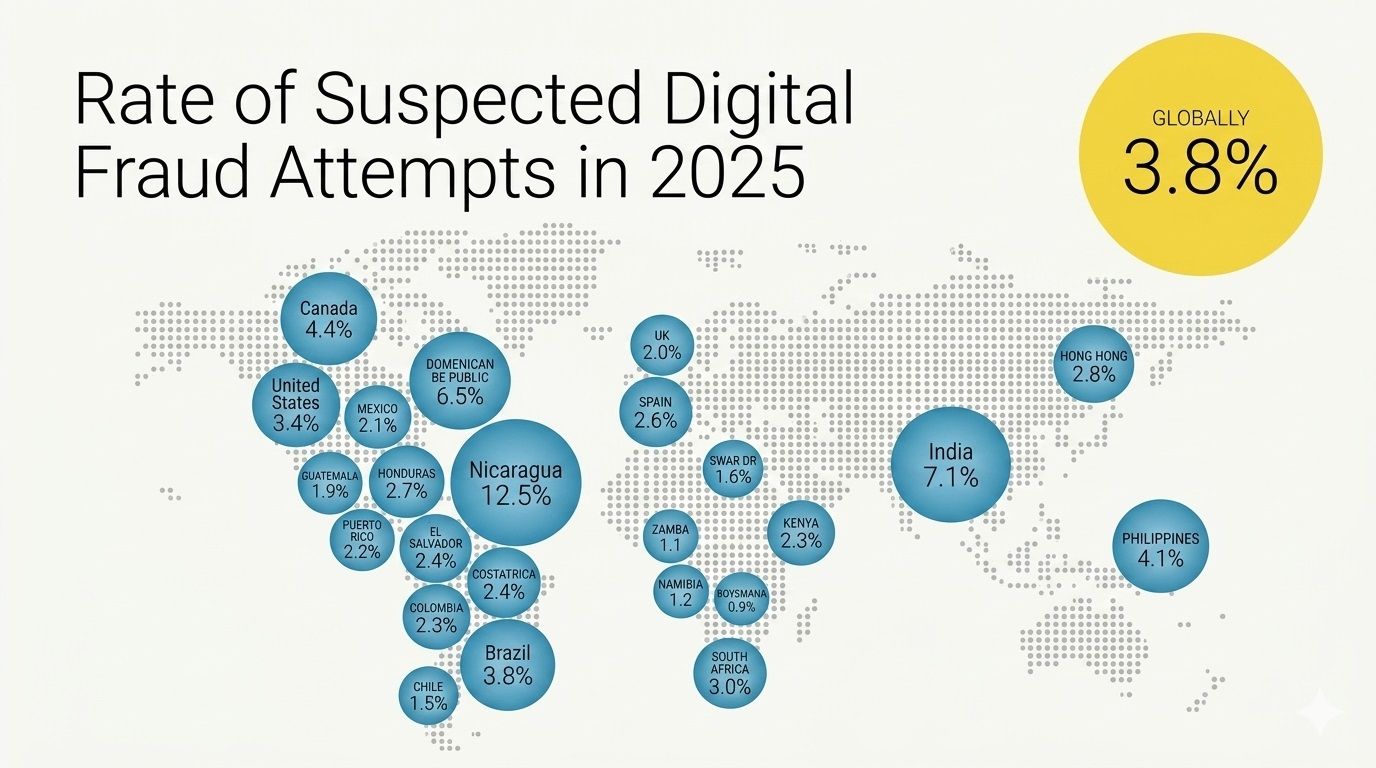
TransUnion’s data also show that fraudsters are adapting their tactics to local market conditions. While account creation is the riskiest stage in many countries, India stands out because account login is the most vulnerable point in the digital consumer journey. India’s suspected digital fraud attempt rate for account logins was 7.1%, nearly double the global benchmark of 3.8%.
India’s Digital Challenge
India’s consumer experience reflects the broader global trend but with sharper exposure to identity-based attacks. About 41% of surveyed consumers said they were targeted and fell victim to phishing, while 46% reported being targeted but avoiding losses. Only 13% said they had not been targeted at all.
The findings suggest that India’s rapidly expanding digital payments, banking and ecommerce sectors are creating attractive opportunities for organised fraud networks. Unlike several other markets where fraudsters focus on creating fake accounts, attackers in India are increasingly seeking to compromise existing customer identities, allowing them to access established financial relationships and transaction histories.
For businesses, the implications extend beyond direct financial losses. TransUnion found that fraudsters increasingly target industries with lower levels of identity proofing, while sectors such as telecommunications and online communities have seen rising suspected fraud attempts globally. As India’s digital economy grows, stronger authentication systems and real-time fraud detection are likely to become competitive necessities rather than compliance requirements.
The report points to a common challenge across markets: digital adoption is expanding faster than fraud defences. For India, where online transactions and digital identities are becoming central to economic activity, the ability to protect consumers without slowing growth could emerge as a critical test for financial institutions, technology firms and policymakers.