


New Delhi: India’s technology regulator has directed Meta to halt the rollout of WhatsApp’s proposed username feature in the country and submit a detailed explanation within three days, marking the latest instance of heightened regulatory scrutiny over new digital products amid concerns around cybersecurity and online fraud.
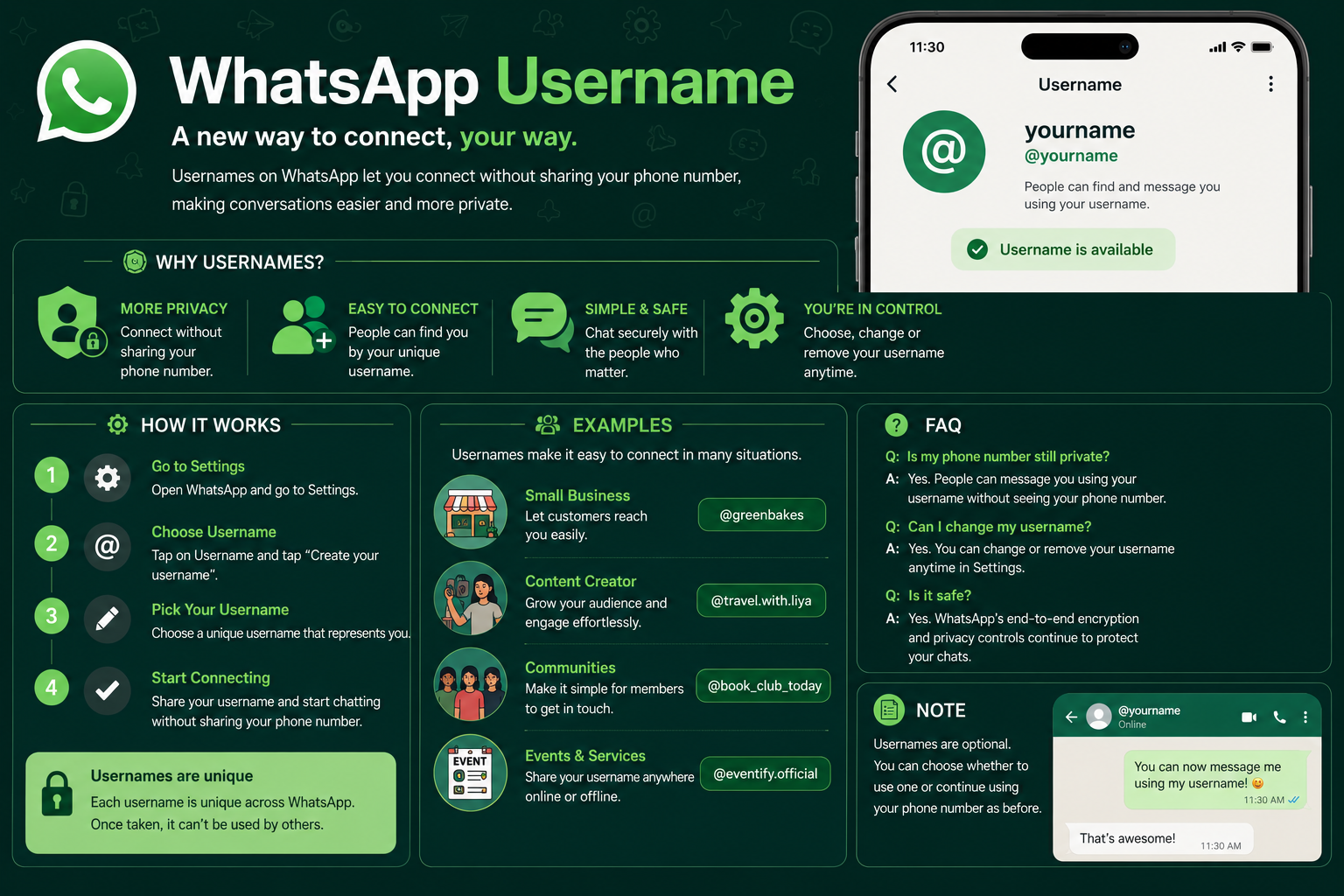
The Ministry of Electronics and Information Technology (MeitY) has instructed the social media giant not to introduce the feature in India until consultations with the government are completed, according to people familiar with the development. The move comes just days after WhatsApp announced that users would soon be able to reserve unique usernames, allowing them to connect without sharing their mobile phone numbers.
Fraud Risks Rise
Government officials are understood to be concerned that the proposed feature, despite its privacy benefits, could inadvertently make it easier for fraudsters to impersonate individuals, businesses and public institutions by registering misleading usernames. Authorities fear such impersonation could fuel phishing attempts, financial scams and identity fraud unless adequate safeguards are in place. The notice asks Meta to explain the feature's design, its verification mechanisms and the safeguards built into the system before any rollout takes place in India. Officials have also sought clarity on how WhatsApp intends to prevent misuse by malicious actors and how quickly fraudulent accounts could be detected and removed.
The government’s intervention effectively pauses the India launch even as WhatsApp has already begun allowing users in several markets to reserve usernames ahead of a wider global rollout planned later this year.
Privacy Versus Security
The username feature represents one of WhatsApp’s biggest identity changes since its launch. Instead of sharing phone numbers, users would be able to communicate using unique usernames, bringing the messaging platform closer to services such as Telegram and Signal while offering an additional layer of privacy.
Meta has positioned the feature as a privacy enhancement, arguing that it reduces unnecessary exposure of users’ phone numbers, especially when messaging new contacts, joining groups or interacting with businesses.
However, Indian authorities appear unconvinced that privacy gains outweigh the potential security challenges.
“Cybersecurity cannot be an afterthought,” a government official told PTI, indicating that messaging platforms could be held accountable if new features create opportunities for cyber fraud or public deception.
Meta’s Response
Meta has defended the upcoming feature, saying it has been designed with multiple protections to minimise abuse.
“The feature is designed to protect the privacy of your phone number,” the company said, adding that users will need to know an exact username before initiating contact because there will be no public directory or searchable list of usernames.
The company has also said usernames will follow specific formatting rules and that built-in safeguards have been developed to reduce impersonation and misuse. According to Meta, the platform has incorporated measures aimed at preventing fraudulent registrations while maintaining users’ privacy.
While Meta has not publicly commented on the government notice itself, people familiar with the matter said the company is working with Indian authorities and preparing its response within the stipulated three-day deadline.
Growing Regulatory Scrutiny
The development underscores India’s increasingly proactive approach towards digital platforms introducing new features with potential implications for cybersecurity and consumer protection.
The country has witnessed a sharp increase in online financial fraud, impersonation scams and phishing attacks in recent years, prompting regulators to examine how technological innovations could be exploited by criminals. Messaging applications have frequently figured in investigations involving investment scams, fake customer support services and fraudulent government communications.
Against this backdrop, officials appear keen to ensure that any feature allowing users to mask their phone numbers does not create fresh vulnerabilities for law enforcement or consumers.
What Happens Next
Meta is expected to submit a detailed explanation outlining the functioning of WhatsApp usernames, the authentication process, anti-abuse mechanisms and safeguards against impersonation. The government will review the response before deciding whether the feature can be introduced in India or whether additional conditions need to be imposed.
Until those consultations conclude, WhatsApp’s username rollout will remain on hold in India, potentially delaying one of the platform's most significant privacy-focused upgrades even as it moves ahead in other markets.
(Cover photo by BoliviaInteligente on Unsplash)