
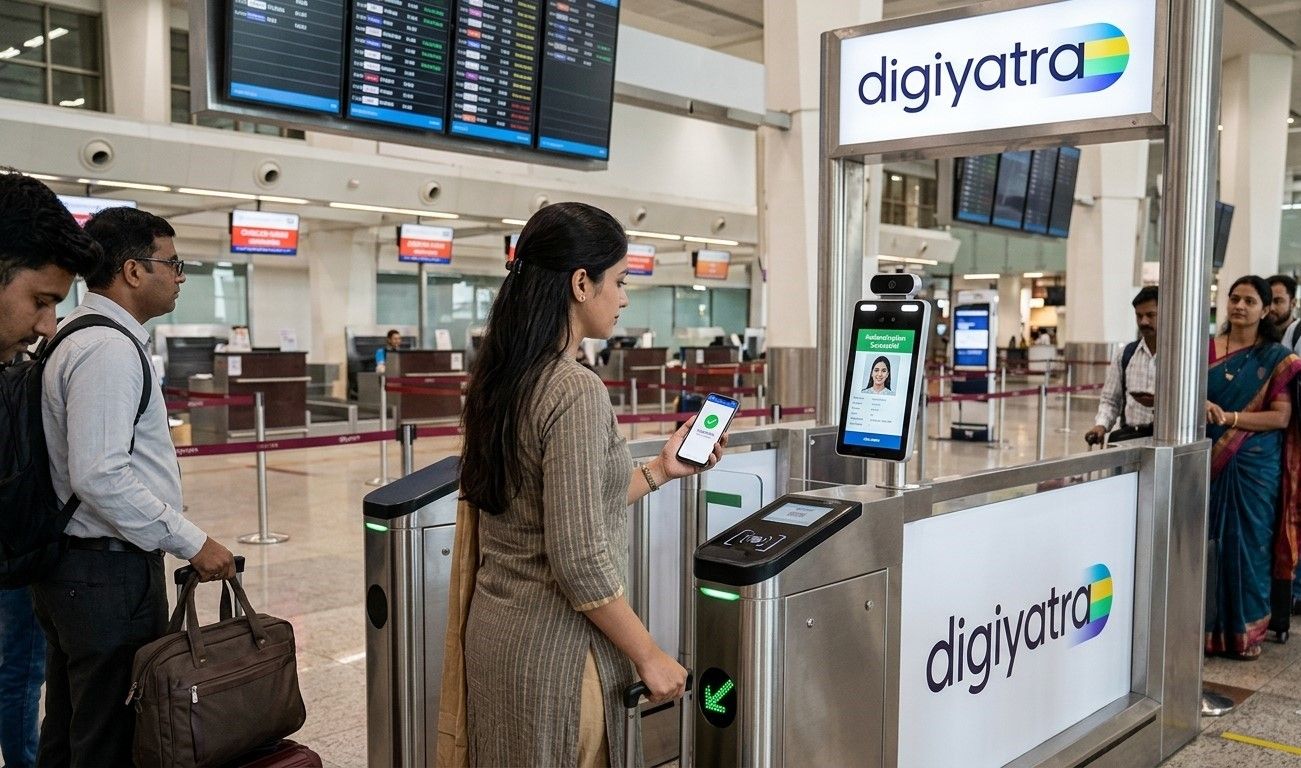

New Delhi: The digital transformation of global air travel has reached a definitive turning point. Following successful industry trials, the era of the physical passport is officially giving way to a seamless, biometric future. The ‘face-as-your-boarding-pass’ reality is no longer a distant concept; it’s the new standard for international transit.
This transition gained official momentum on Wednesday when the International Air Transport Association (IATA) announced that global trials have “confirmed” the viability of fully contactless travel. By integrating digital identity systems into existing infrastructure, the industry is moving away from traditional paper documents in favour of a more efficient and speedier biometric-enabled process. This marks a practical step forward in modernizing how passengers move across borders worldwide.
The Proofs of Concept (PoCs), conducted with airlines, airports, governments and technology providers across Europe and the Asia-Pacific, showed that passengers can complete entire journeys using secure digital identities stored in mobile wallets. These systems allow travellers to share identity data in advance, undergo biometric verification at airport checkpoints, and move through departure, transfer and boarding without repeatedly presenting physical passports or boarding passes. The trials also highlighted how early data sharing can streamline border control processes and reduce congestion at busy airports.
“We have proven that digital identity for international travel works securely and efficiently. For travellers to benefit from this important modernization, governments must accelerate efforts to issue and accept Digital Travel Credentials (DTCs) — secure digital versions of passports. The result will be stronger security, smoother journeys, and greater efficiency,” said Willie Walsh, IATA Director General.
The trials found that wallet-based digital identity solutions —including global platforms like Apple Wallet and Google Wallet, as well as national systems such as India’s Digi Yatra — worked successfully in live airline environments. Passengers were able to securely share personal data ahead of travel with their consent, enabling pre-travel checks and reducing the need for repeated document handling at airports. This approach also gives travellers greater control over their personal data, as only the necessary information is shared at each stage of the journey.
Biometric verification proved capable of replacing manual document checks at key touchpoints, allowing for a seamless “tap-and-go” experience. A single digital identity could be reused across multiple stages of the journey, from airport entry to boarding gates, while interoperability between systems operated by airlines, airports and governments was demonstrated, even when multiple carriers and different digital identity wallets were involved. This level of interoperability is seen as critical for scaling the technology across international routes.

The trials confirmed that passengers can enroll remotely into digital identity systems, selectively share only data for travel, and verify themselves biometrically throughout their journey without presenting physical documents. (Cover photo by cal gao on Unsplash)
The PoCs were built on IATA’s Contactless Travel Directory and One ID standards, alongside international frameworks such as ISO, OpenID and W3C standards, ensuring compatibility across borders and platforms. These standards-based approaches are intended to prevent fragmentation and ensure that different systems can communicate securely and efficiently.
Three specific trials highlighted different aspects of implementation. One, involving Japan Airlines and multiple international airports, demonstrated that passengers could share identity data in advance and reuse it across connecting flights, eliminating repeated checks and enabling smoother transfers. Another, led by Air New Zealand, showed how airline-managed digital wallets could enable remote biometric enrolment during booking and check-in, supporting contactless processing through airport and customs touchpoints. A third trial with IndiGo in Bengaluru confirmed that different digital identity providers — including national and global systems — can function together within a single journey, enabling seamless processing from airport entry to boarding.
The trials also confirmed that passengers can enroll remotely into digital identity systems, selectively share only the required data for travel, and verify themselves biometrically throughout their journey without presenting physical documents. This not only improves convenience but also enhances security by reducing the risk of document fraud and human error.
“The next step is for governments to put the frameworks in place to integrate digital identity into global travel processes,” said Walsh.
IATA says, countries must establish the legal and technical frameworks to issue DTCs, ensure border, visa and travel-authorization systems are ready to accept and verify them, and work with industry partners, other governments and international organizations to enable large-scale interoperability. Without such alignment, the benefits of digital identity in travel could remain limited to isolated corridors.
The digital identity solutions tested align with the International Civil Aviation Organization’s DTC framework, where passport data is securely captured from a physical document, stored in a mobile wallet, and linked to the traveller through biometric verification. The next phase will involve governments issuing DTCs directly to travellers’ devices, eliminating the need to scan physical documents altogether.
While the industry moves toward digital transformation, IATA noted that paper-based travel documents will remain available to ensure accessibility for all passengers, particularly those who may not have access to digital tools. It emphasized that the transition will be gradual, with both digital and traditional systems operating in parallel until global adoption is achieved.