
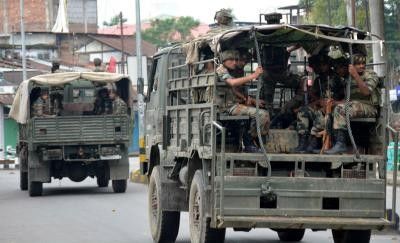

The central government has officially extended the Armed Forces (Special Powers) Act (AFSPA) for another six months in designated parts of Northeast India. As per reports, the controversial legislation remains active due to persistent security evaluations across select regions.
Geographic Scope and Designations
The six-month extension applies to specific volatile zones classified as "disturbed areas" under the legislation. According to reports, the Centre declared nine districts in Nagaland as disturbed areas to facilitate ongoing security operations.
Alongside Nagaland, the notification encompasses designated parts of Manipur and Arunachal Pradesh. In Manipur specifically, reporting indicates that 13 police station areas have been formally excluded from the purview of the AFSPA extension, narrowing the enforcement zone compared to previous terms.
Security Justification and Policy Context
The Ministry of Home Affairs (MHA) implements these recurring semi-annual extensions based on a continuous assessment of law and order and insurgent dynamics in the region. The decision to retain the act underscores the government's ongoing reliance on special security powers to maintain stability in pockets where localized threats persist.
While the extension aims to empower security forces to counter remaining challenges, the Act continues to be a central point of discussion concerning regional civil liberties and governance.
Implications for the Region
The rolling six-month renewals reflect a calibrated approach by the Centre, tapering enforcement in areas showing improvementsuch as the exclusion of specific police jurisdictions in Manipur, while maintaining stringent oversight where vulnerabilities remain. State administrations in Nagaland, Manipur, and Arunachal Pradesh continue to navigate the balance between localized peace initiatives and the operational necessities cited by federal security agencies.