
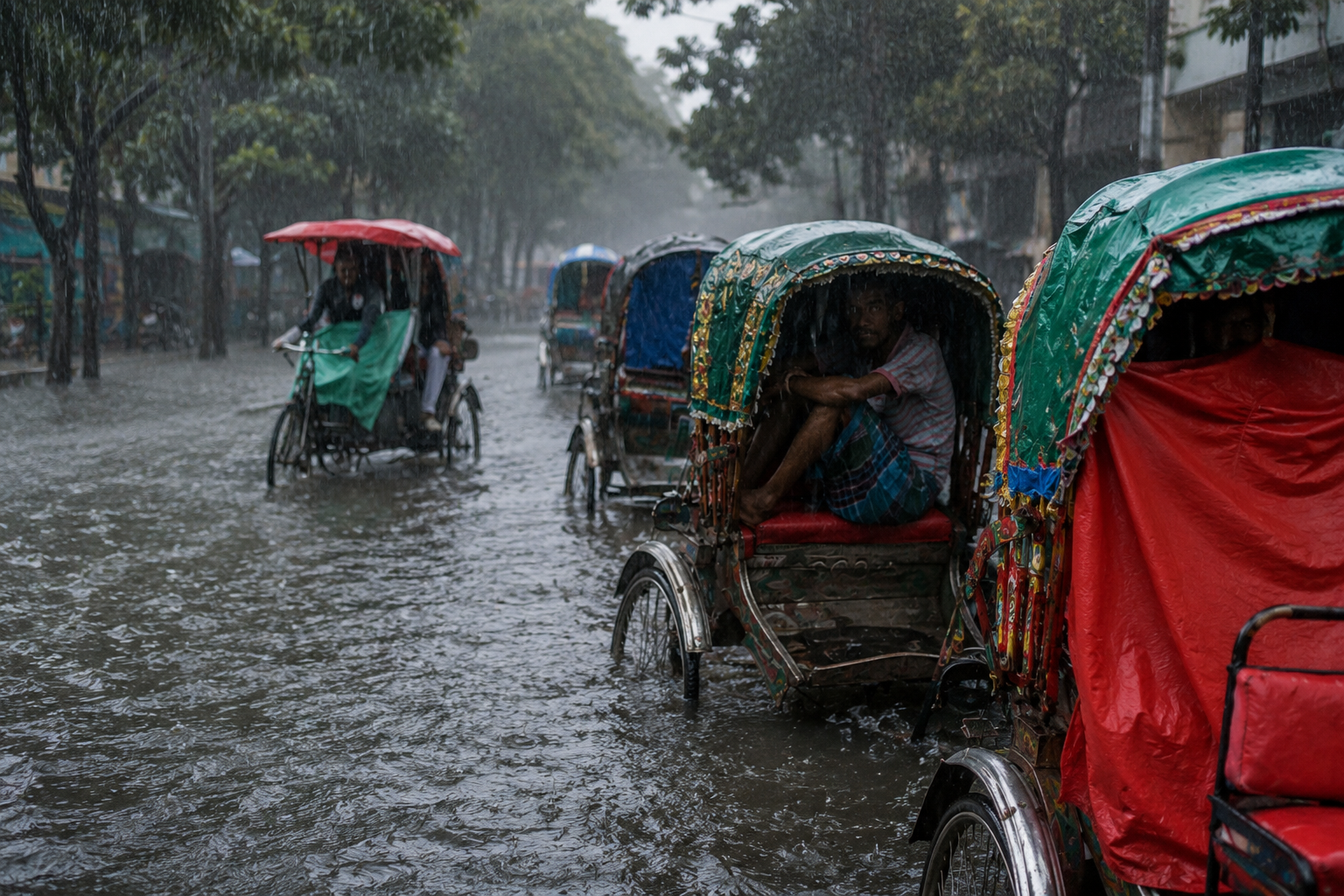

As of 13 July 2026, the monsoon season in Bangladesh has escalated into a severe humanitarian crisis. The death toll from recent floods and landslides has reached 44. While the capital city of Dhaka grapples with unprecedented waterlogging, meteorological reports suggest the danger is migrating toward the country's northern regions.
Urban Paralysis in Dhaka
Dhaka, a megacity often vulnerable to drainage issues, is currently facing extreme conditions that have brought daily life to a standstill. Reports from social media and local outlets highlight the Shantinagar area as a primary site of devastation. In Shantinagar, residents have been found stranded on roads as floodwaters inundated major thoroughfares, making transit nearly impossible and leaving commuters trapped in their vehicles.
This urban paralysis underscores the persistent challenge of waterlogging in Dhaka. When heavy precipitation occurs, the city’s infrastructure is frequently overwhelmed, leading to the scenes witnessed today where streets resemble rivers. The situation in Shantinagar is representative of a broader struggle across the capital, where the combination of intense rainfall and inadequate drainage continues to pose a risk to millions of residents.
Shifting Threats to the North
While the immediate focus remains on the capital's submerged streets, the geographical scope of the disaster is expanding rapidly. The flood threat is now shifting north. According to some reports, Bangladesh was likely to face significant flooding in the Brahmaputra and Meghna River basins during July and August of this year.
These projections were based on anticipated heavy precipitation in these specific river basins. As the monsoon progresses, the northern regions are now on high alert. The transition of the flood front from the urban center to the riverine north suggests a prolonged period of instability for the country’s agricultural heartlands, which are critical for food security and rural livelihoods.
The Climate and Health Nexus
This current crisis aligns with broader warnings regarding the nation’s environmental and public health vulnerability. A recent report identified climate change as a major public health threat to Bangladesh. The intersection of extreme weather events, like the current flooding, and public health is becoming increasingly evident as the disaster unfolds.
As waters rise, the risk of waterborne diseases increases, and the displacement of vulnerable populations creates a secondary layer of crisis that extends beyond immediate physical casualties. The 44 deaths reported thus far represent the immediate impact, but the long-term health implications for those living in inundated areas like Shantinagar or the Brahmaputra basin remain a significant concern for health officials.