
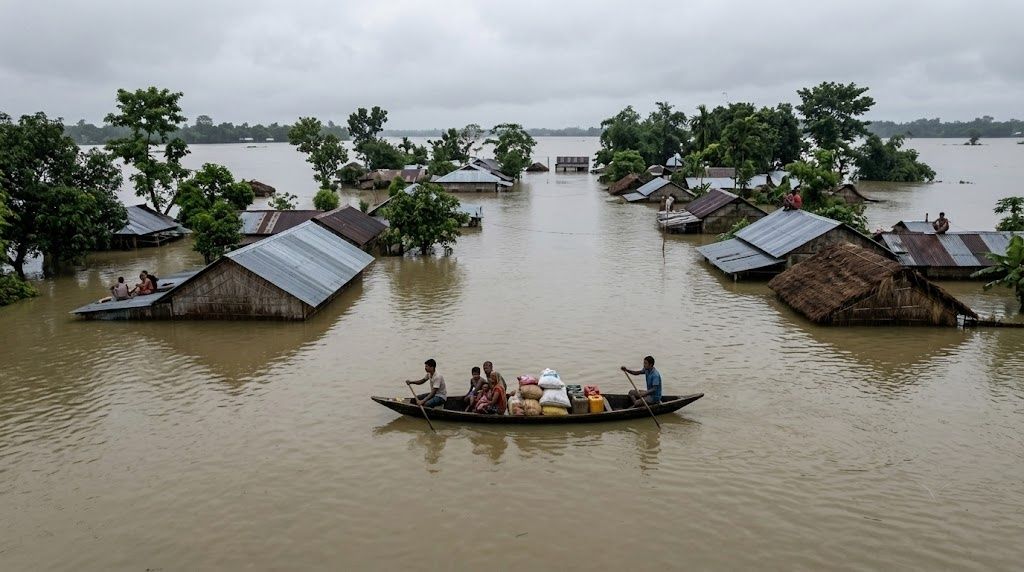

The flood situation in Assam remains a significant humanitarian challenge today, August 5, 2026, as the state grapples with the aftermath of surging waters that have claimed 87 lives. The death toll reached this grim milestone late yesterday, highlighting the persistent danger posed by the monsoon season in Northeast India. While waters are beginning to recede in certain areas, the scale of the displacement remains immense, with nearly 1.3 lakh people still directly affected by the deluge.
Humanitarian Impact Across Seven Districts
The scale of the disaster is widespread, spanning multiple regions across the state. The flooding has severely impacted at least seven districts. Currently, over 1.28 lakh people are navigating the consequences of the surge, which has displaced thousands from their homes and forced many into temporary shelters.
Data regarding the total impact varies slightly between reporting agencies, reflecting the difficulty of tracking such a fast-moving crisis. While most outlets cite approximately 1.3 lakh people currently affected, According to reports, over 11.45 lakh people have been impacted in total throughout the duration of this flood event. This disparity underscores the broad reach of the disaster beyond those currently residing in relief camps or directly submerged zones.
Shifting Dynamics: Receding Waters and Rehabilitation
There are signs that the peak of the immediate surge may be passing in specific localities. Rehabilitation efforts are beginning to gain pace as floodwaters recede in certain sectors. This transition from emergency rescue to rehabilitation is a critical phase for the state administration, though the threat remains high in areas where waters continue to surge or where infrastructure has been compromised.
The displacement of thousands across the seven most-affected districts continues to strain local resources. Surging waters have been primarily responsible for the mass displacement that has defined this week’s headlines. The focus is now shifting toward assessing the damage to infrastructure and ensuring that the fatality count does not climb further as health risks often emerge in the wake of receding floods.
A Continuing Disaster Management Challenge
Despite the move toward rehabilitation in some districts, the crisis is far from resolved. With nearly 1.3 lakh people still affected, the state's disaster management infrastructure remains under significant pressure. The 87 confirmed deaths represent a significant loss of life, and the impact on the livelihoods of those in the seven affected districts will likely be felt for months to come.
As of today, the priority remains the provision of aid to the displaced and the steady restoration of services in areas where the water has pulled back. International and national reporting on the situation reflects a state in a delicate balance between active crisis management and the long road to recovery.