
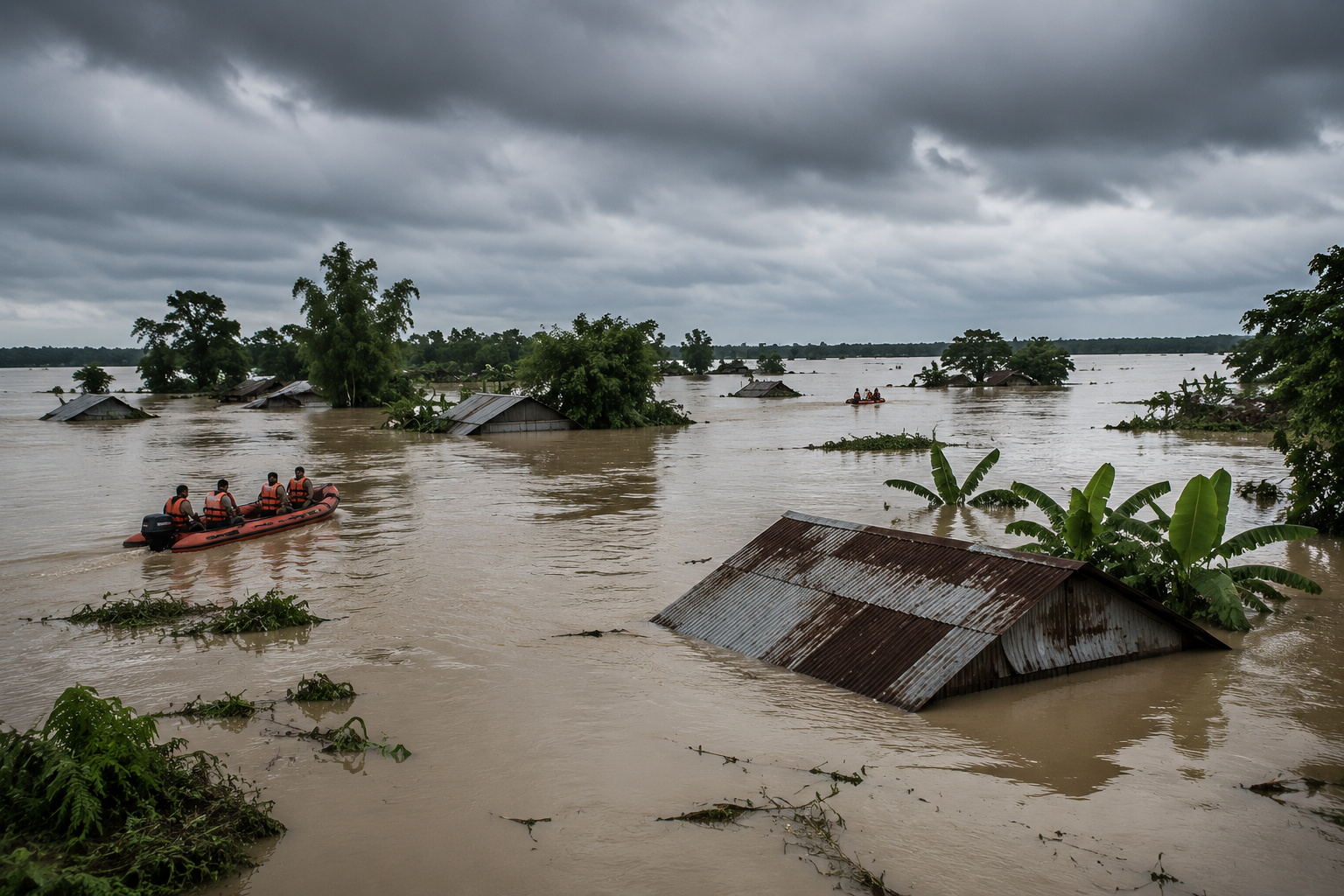

The flood situation in Assam has reached a devastating peak as the state recorded 21 deaths in a single 24-hour period ending Wednesday, July 22, 2026. This tragic surge brings the cumulative death toll for the current monsoon season to 31. According to reports, the disaster has now affected more than 5.64 lakh residents across 16 districts. The rapid escalation over the last day has transformed the situation into a major humanitarian emergency, with authorities struggling to keep pace with the rising waters.
Rising Fatalities and Regional Impact
The most severe impact of this latest wave has been felt in Upper Assam. Conditions in the region worsened sharply within the last 24 hours, accounting for the bulk of the recent fatalities. The suddenness of the water's rise caught many communities off guard, leading to the highest single-day death toll recorded this year.
The geographic scale of the flooding is now immense. According to reports, 16 districts are currently under water. With over 564,000 people affected, the displacement of families has reached critical levels. The total toll rising to 31 reflects the increasing difficulty of conducting rescue operations in areas where road connectivity has been completely severed by the deluge.
Brahmaputra Breaches Danger Thresholds
The hydrological data for July 22 indicates a precarious situation for the state's major river systems. The Brahmaputra river has crossed the official danger mark in 12 different districts. This widespread breach of safety levels has triggered a cascade of flooding in downstream areas, as the river's capacity to contain the monsoon runoff is exhausted.
The impact is compounded by the fact that the river is flowing above danger levels across a vast stretch of its course through the state. The 21 deaths in 24 hours are a direct consequence of this rapid inundation. The sheer volume of water entering the Brahmaputra from its tributaries in Upper Assam has created a surge that is now threatening to overwhelm embankments in central and lower Assam districts.
Humanitarian Crisis and Infrastructure Strain
With over 5.65 lakh people affected, the state's relief infrastructure is under unprecedented pressure. According to some reports, over 5.64 lakh individuals are currently struggling with the floods, the actual number of those needing immediate assistance may be higher as more remote areas are surveyed. The flooding has not only displaced people but has also disrupted essential services and agricultural stability across 16 districts.
Details on the specific number of relief camps and the deployment of specific disaster response forces have not been reported yet in the latest bulletins. However, the scale of the crisis suggests that rescue teams are racing to assist flood-hit communities before water levels rise further. The focus remains on the 12 districts where the Brahmaputra remains most volatile, as these areas face the highest risk of further casualties.
As of the evening of July 22, 2026, Assam remains in the grip of a severe natural disaster. The loss of 21 lives in a single day serves as a grim reminder of the state's vulnerability to extreme monsoon events. With the Brahmaputra still flowing above danger levels and over half a million people affected, the immediate priority for the administration remains the mitigation of further loss of life.