
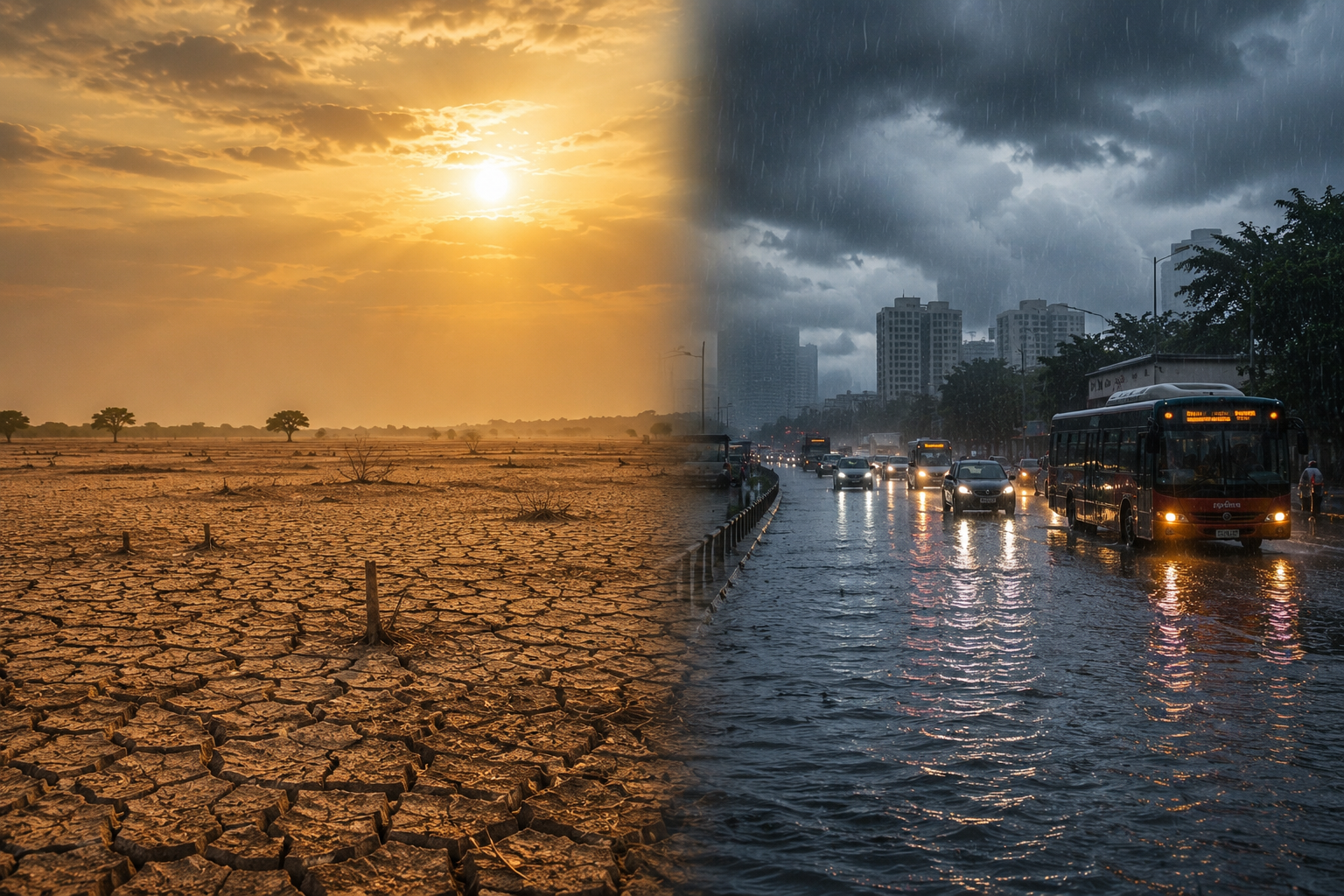

As of July 9, 2026, the traditional seasonal rhythms that once defined life across Asia appear to be in a state of fundamental collapse. Reports from across the continent today paint a picture of a climate in flux: while Delhi grapples with intense rainfall following a period of punishing heat, parts of China are simultaneously battling severe flooding and persistent drought. According to NDTV, these extreme weather patterns are no longer anomalies but are actively rewriting the weather map of the region.
A Lost Seasonal Rhythm
The predictability of the monsoon, once the lifeblood of Asian agriculture and water security, is being replaced by a sequence of extremes. As reported by ETV Bharat, India’s weather is losing its historical rhythm. The traditional calendar has been upended, with heatwaves now appearing as early as March and the need for air conditioning extending into October.
This shift is characterized by what meteorologists describe as erratic behavior: longer dry spells interrupted by sudden, violent bursts of extreme rainfall. This transition is not limited to a single sub-region. According to Mathrubhumi English, the redefining of the monsoon is visible from the southern tip of Kerala to the northern reaches of Jammu and Kashmir. These changes are further complicated by global phenomena; as the BBC recently noted, El Niño continues to play a significant role in modulating global temperatures and weather disruptions, exacerbating the unpredictability of the seasonal cycle.
Rewriting the Maps of Disease and Health
The consequences of these shifting patterns extend far beyond the meteorological. In India’s mountainous regions, climate change is effectively rewriting the map of disease, according to Health Policy Watch. As temperatures rise and rainfall patterns shift, the geographical range of various illnesses is expanding into higher altitudes where they were previously unknown.
Furthermore, the human cost of these rapid environmental shifts includes a growing mental health crisis. Research published in Frontiers highlights the vulnerabilities and impacts of climate change on mental health in India, noting that the loss of traditional seasonal stability and the trauma of extreme weather events are creating new pathways for psychological distress. The "global crisis," as described by streamlinefeed.co.ke, is thus as much a public health emergency as it is an environmental one.
Regional Vulnerability and the New Normal
The scale of this transformation is particularly evident in South Asia. While India navigates its redefined monsoon, neighboring Pakistan remains at the forefront of climate vulnerability, as noted by The Express Tribune. The combination of shifting rainfall and rising temperatures suggests that the entire region is entering a period where historical data may no longer serve as a reliable guide for the future.
Climate scientists suggest that as global temperatures continue to rise, the monsoon will likely become even more volatile. The current reality—where extreme heat is immediately followed by inundation—is a signal that the regional climate map has been permanently altered. For policy makers and citizens alike, the challenge is no longer just predicting the next season, but adapting to a world where the seasons themselves have changed.
Sources
1. NDTV
2. streamlinefeed.co.ke
3. Health Policy Watch
4. Mathrubhumi English
5. ETV Bharat
6. BBC
7. Frontiers
8.The Express Tribune